Vegetables
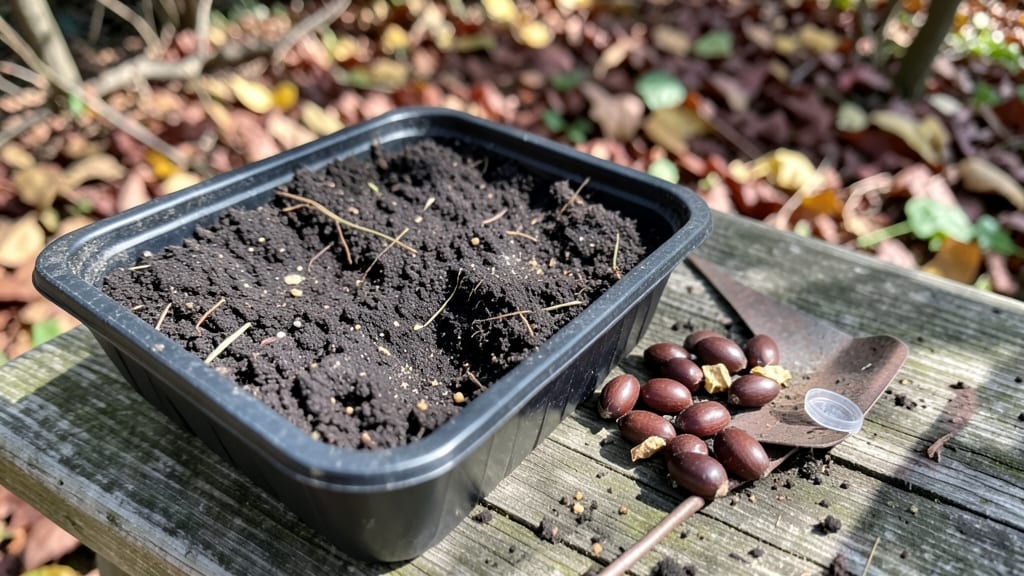
Apple seeds images document the full germination cycle, from the first root hairs appearing to the unfolding of seed leaves (cotyledons) over several weeks. These visuals let you monitor root length, stem thickening, and leaf expansion as the seedling matures.
Understanding these stages helps you spot problems early—like stunted roots or yellowing leaves—before they become serious. 🌱 The images also show how environmental factors like soil moisture and light affect growth speed.
For example, seeds kept in damp paper towels will sprout faster than those planted directly in dry soil, giving you clearer comparisons of healthy versus stressed development.
You'll notice the most dramatic changes in the first 7-14 days, when the radicle (root) emerges and begins branching. By 3-4 weeks, the cotyledons will have fully unfurled, revealing the plant's true leaves beneath.
Using a ruler or coin as a size reference in your photos makes it easier to track progress week by week.
💡 In This Article
- Apple Seed Germination Stages Explained Visually
- Best Practices for Photographing Apple Seed Growth
Apple seed germination stages explained visually
Germination begins when an apple seed absorbs moisture, triggering the radicle—a tiny embryonic root—to emerge first. This initial stage, called imbibition, occurs within 24-48 hours if conditions are ideal (moisture, 60-75°F temperatures).
The radicle grows downward at about 0.5-1 inch per week, anchoring the seedling while drawing nutrients from the soil. 🌱 What's fascinating is how this root system develops a 1-2 millimeter diameter within days, creating the foundation for the entire plant.
The next phase involves the hypocotyl, the stem connecting the radicle to the seed leaves (cotyledons). This section elongates rapidly, pushing upward through the soil at a rate of 0.25-0.5 inches daily under optimal conditions.
During this 7-10 day period, you'll notice the seedling's stem thicken noticeably—from 1 millimeter to 3-5 millimeters in diameter—as it prepares to support the emerging leaves. Light exposure becomes critical here, as etiolated (pale, stretched) seedlings result from insufficient light, while proper lighting promotes sturdy growth.
Cotyledon emergence marks the third stage, where the seed leaves unfold to reveal the plant's first true leaves beneath.
This transformation occurs around 2-3 weeks and is visually dramatic: the cotyledons expand from 0.25 inches to 1-2 inches wide, turning from pale yellow to green as chlorophyll develops. 💫 The key factor here is photosynthesis—these leaves begin producing energy for the seedling's growth, reducing its reliance on the seed's stored nutrients.
This is why you'll see healthier seedlings with more vibrant cotyledons in well-lit environments compared to shaded ones.
Temperature plays a surprising role in these stages. While 60-75°F is ideal, seeds exposed to 80°F+ germinate faster but produce weaker seedlings, while below 50°F slows or halts growth entirely. Moisture is equally critical—the seed must maintain 50-60% humidity to prevent drying, yet excess water can cause rot.
These factors explain why some gardeners use damp paper towels for initial germination: it creates a controlled environment where you can monitor each stage without soil interference.
Visual documentation becomes invaluable here. By placing a ruler or coin beside your seedling in photos, you can track growth metrics precisely.
For example, a 1-inch increase in root length over 7 days indicates healthy development, while stagnation suggests environmental stress. 🔥 Annotated images can also highlight key features like root branching patterns or cotyledon color shifts, providing tangible evidence of the seedling's health.
This level of detail helps distinguish between normal growth and potential issues like fungal infections or nutrient deficiencies.
What most gardeners don't realize is how these stages reflect the seed's genetic memory. Apple seeds carry epigenetic information from the parent tree, influencing growth patterns.
For instance, seeds from Malus domestica varieties often produce seedlings with 1-2 inch cotyledons within 3 weeks, while heirloom varieties may take 4-5 weeks to reach the same size.
This genetic variation is why visual documentation becomes essential—it lets you compare different apple varieties' germination rates and adapt your care accordingly.