Pruning
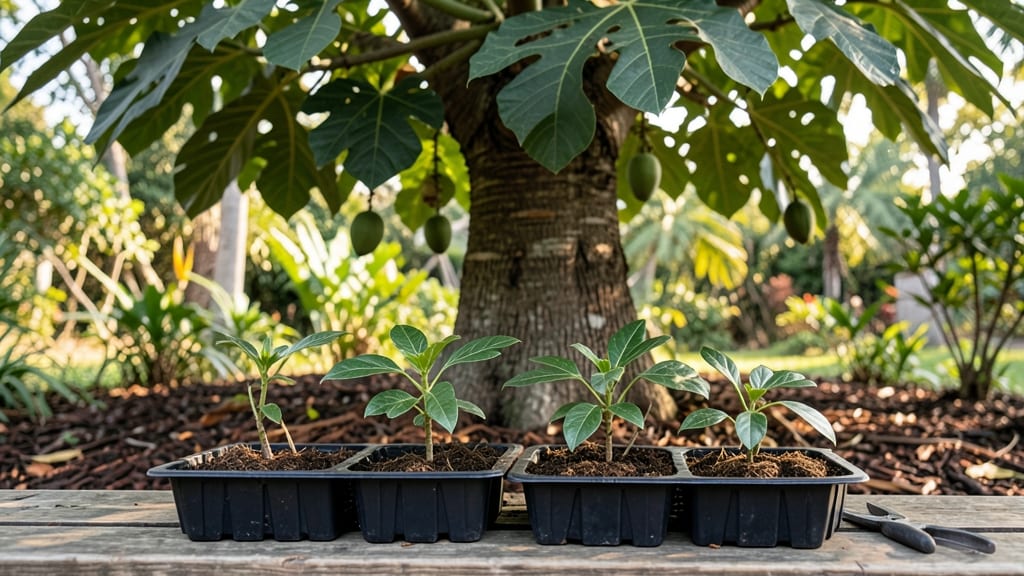
Growing breadfruit tree seeds from scratch starts with a simple trick—stratification—that turns stubborn seeds into eager sprouts. 🌱 I’ve struggled with this myself, watching seeds rot before ever breaking dormancy, until I learned the right balance of moisture and time.
The key isn’t just soaking or planting—it’s mimicking the tropical rains that trigger germination in the wild.
You’ll need just three things: fresh seeds (or properly stored ones), a damp paper towel or peat moss, and a warm, humid spot—think kitchen counter or greenhouse. Breadfruit seeds are finicky about timing; they need 4-8 weeks of consistent moisture to soften their tough outer shell.
Once they crack open, you’re halfway to a tree that could feed your family for decades.
The payoff comes fast: within 2-3 weeks after sprouting, you’ll have sturdy seedlings ready for transplanting. These aren’t delicate seedlings—they’re built for tropical heat and humidity, with thick stems that handle the move to soil like pros.
By summer’s end, you could be watching your first leaves unfurl, knowing you grew it from a seed.
Works best in zones 10-12, but with extra warmth and care, even subtropical gardeners can coax them along. The secret? Patience and a humid propagation chamber. Let’s get those seeds sprouting!
📚 In This Guide
- What you need
- Instructions
- Tips and common mistakes
- Wrapping up and next steps
What you need
- ● Breadfruit seeds: Fresh, firm seeds (avoid soft or shriveled ones). Aim for 5–10 seeds per batch to account for variability.
- ● Stratification medium: Option 1: Moistened peat moss or coconut coir (sterilized, 2–3 cups per batch).
- ● Option 2: Vermiculite or perlite (for better drainage, 1–2 cups).
- ● Plastic storage bags or containers: Sealable, quart-sized (1–2 per batch) with small holes for airflow.
- ● Water: Room-temperature, chlorine-free (use filtered or rainwater if possible).
- ● Spray bottle: For gentle misting (avoids over-saturating the medium).
- ● Small hand trowel or spoon: For mixing the stratification medium.
- ○ Plastic wrap or breathable cover: To retain humidity (optional, if bags aren’t available).
- ○ Thermometer (optional): To monitor 60–75°F (15–24°C) temperature range.
- ● Notebook & pen: To track seed progress (date planted, moisture checks, etc.).
- ● Patience: Breadfruit seeds may take 4–12 weeks to sprout—consistency is key!
- ● Warm, humid environment: A cool fridge (35–45°F / 2–7°C) for cold stratification (if needed) or a warm, shaded spot for room-temperature methods.
- ● Basic gardening knowledge: Familiarity with seed germination and moisture control.
Step-by-step stratification for breadfruit tree seeds
Here's the foolproof method I use to break dormancy and get those stubborn seeds sprouting reliably.
🌱 Step 1: Harvest and Prepare the Seeds
Collect mature breadfruit seeds from fully ripe fruit—look for ones that sink in water (a sign of full maturity). Remove the seeds from the flesh and rinse them thoroughly under lukewarm water to remove any remaining pulp. This prevents mold and rot during stratification.
Let the seeds air-dry for 3-5 days in a shady spot. You'll know they're ready when the outer coating feels slightly papery and no longer sticky. Store them in a paper bag until you're ready to stratify—this keeps them dry but allows airflow.
💧 Step 2: Cold Stratify for 6-8 Weeks
Place the dried seeds in a zip-top plastic bag with a damp paper towel. The towel should feel like a wrung-out sponge—wet but not dripping. Seal the bag and place it in the refrigerator (35-40°F) for 6-8 weeks. This mimics winter conditions and breaks the seed's natural dormancy.
Check the bag weekly. If the paper towel dries out, mist it lightly with water and reseal. Condensation inside the bag is normal, but if you see mold, remove the affected seeds immediately. After 6 weeks, you'll start seeing tiny cracks in the seed coat—that's your signal they're ready for the next step.
☀️ Step 3: Warm Up and Plant for Germination
Remove the seeds from cold storage and soak them in warm water (80-85°F) for 12-24 hours. This softens the seed coat further and kickstarts the germination process. Drain them well and plant ½ inch deep in a well-draining potting mix in small pots or seed trays.
Keep the soil consistently moist but never soggy. Place the pots in a warm location (75-80°F), like on top of a refrigerator or under a heat mat. Germination can take 2-6 weeks, so patience is key. You'll know it's working when you see a tiny white root emerge from the bottom of the seed.
🌿 Step 4: Transplant and Care for Young Seedlings
Once the seedlings develop 2-3 true leaves (not just the initial seed leaves), they're ready to move to slightly larger pots. Handle them gently—they're delicate at this stage. Use a mix of 50% potting soil and 50% perlite to encourage strong root growth.
Place the pots in bright, indirect light for the first week to help them adjust. After that, gradually introduce them to morning sun for 2-3 hours daily, increasing exposure over 2 weeks. Breadfruit seedlings grow quickly once they get established, so keep an eye on their water needs—they'll need more as they mature.
⏰ Step 5: Harden Off Before Outdoor Planting
When the seedlings are 6-12 inches tall and you've passed the last frost date, it's time to prepare them for outdoor life. Start by placing them outside in a sheltered spot for 1-2 hours the first day. Gradually increase their outdoor time over 2 weeks, moving them to sunnier locations each day.
By the end of this period, they should be able to handle full sun without wilting. Choose a planting location with well-draining soil and partial shade during the hottest part of the day. Breadfruit trees thrive in tropical climates but can adapt to warmer temperate zones with proper care.
Tips & tricks for perfect breadfruit seed stratification
These little-known strategies will help you break dormancy and get those breadfruit seeds sprouting reliably every time.
The Harvest Factor: When selecting seeds, prioritize those from fully ripe fruit that sink in water—this guarantees maturity. I've learned the hard way that partially ripe seeds often fail to germinate, no matter how long you stratify them. After rinsing with lukewarm water, pat them dry thoroughly to prevent any lingering moisture from causing mold during the 3-5 day drying period.
Stratification Environment: The refrigerator's consistent 35-40°F temperature is crucial for mimicking winter conditions. I place my zip-top bags on the middle shelf where temps stay most stable. If your fridge runs hotter, consider using a dedicated seed fridge or even a garage refrigerator if you have one. Watch for condensation—it's normal, but if you see mold developing, remove those seeds immediately to prevent contamination.
Warm Water Soak Secret: For the 12-24 hour warm water soak at 80-85°F, I use my electric kettle to heat water to exactly 85°F (just off boiling) and let it cool slightly. This precise temperature softens the seed coat without cooking the seeds. After soaking, I drain them on paper towels for 10 minutes before planting to ensure they're not waterlogged when going into the potting mix.
Germination Light Strategy: During the 2-6 week germination period, I've found that placing pots under a simple LED grow light on a timer (12 hours on, 12 hours off) gives more consistent results than natural light alone. The warm location (75-80°F) is critical—if your home runs cooler, consider using a seedling heat mat underneath the pots. Look for that tiny white root emerging from the bottom of the seed as your first sign of success!
Pro Tips for Breadfruit Tree Seeds
- These little-known strategies will help you break dormancy and get those breadfruit seeds sprouting reliably every time.
- The Harvest Factor: When selecting seeds, prioritize those from fully ripe fruit that sink in water—this guarantees m...
- Stratification Environment: The refrigerator's consistent 35-40°F temperature is crucial for mimicking winter conditi...
Frequently asked questions
Got questions about growing breadfruit from seeds?
Here are some of the most common ones—and their answers—to help you succeed!
How long does breadfruit seed stratification take?
Stratification typically takes 4–8 weeks in the fridge (35–40°F). Some seeds may sprout faster, while others need extra time. Check moisture levels weekly—soaked seeds should feel damp but not soggy. Patience is key!
Can I plant breadfruit seeds directly in the ground without stratification?
Yes, but germination rates drop significantly (often <20%). Stratification mimics tropical rainforest conditions, boosting success to 60–80%. If you skip it, plant seeds in a warm, humid microclimate (like a greenhouse) and keep soil consistently moist.
What’s the best soil mix for germinating breadfruit seeds?
Use a light, well-draining mix like:
- 50% peat moss or coconut coir
- 30% perlite or vermiculite
- 20% compost or worm castings
Why aren’t my breadfruit seeds sprouting after stratification?
Common culprits:
- Old seeds: Breadfruit seeds lose viability after 1–2 years.
- Improper moisture: Too dry = dormancy; too wet = rot.
- Temperature swings: Keep seeds consistent (35–40°F).
How do I care for seedlings once they sprout?
Once sprouts appear (1–3 inches tall), move them to bright, indirect light (no direct sun yet!). Water when the top inch of soil dries, and fertilize lightly with diluted seaweed extract every 2 weeks. Transplant outdoors after 3–4 months, when roots fill the pot.
Wrapping up and next steps
Growing breadfruit from seeds is a rewarding journey that connects you to tropical agriculture and sustainable food sources. By mastering the stratification process, you’ll unlock the potential for healthy, thriving trees—whether for your garden, homestead, or even community projects. 🌱
Ready to take the next step? Start by gathering your seeds and supplies, then follow the proven stratification method outlined here. With patience and care, you’ll soon be nurturing your own breadfruit tree—one sprout at a time! Happy growing! 🌿