
Trees
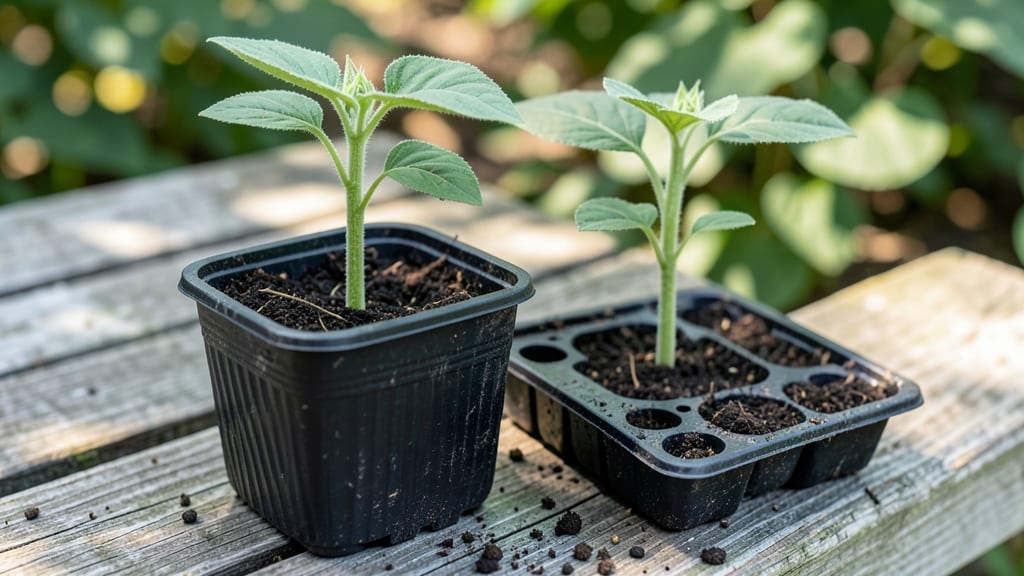
The identification of sunflower seedlings by their cotyledon colors can reveal their varieties long before they bloom—if you know the code. 🌱 I’ve spent years watching those first leaves emerge, and the differences between pale yellow, deep green, or even reddish cotyledons can tell you exactly what type of sunflower you’re growing.
The trick is catching these clues early, before weeds or other plants muddy the picture.
Most beginners overlook cotyledons because they’re tiny and easy to mistake for weeds. But those first leaves hold secrets: striped varieties often show faint purple markings, while giant sunflowers have broader, darker green cotyledons.
A simple magnifying glass helps spot details that separate your prized seeds from dandelions or chickweed. I’ve saved entire trays of seedlings by paying attention to these early signs.
Once you recognize the patterns, identification gets easier—and so does weeding. True sunflower seedlings grow fast, with true leaves appearing in just 7–10 days. By then, you’ll know whether you’re raising a towering Mammoth or a delicate Teddy Bear variety, all from those first tiny clues.
The key is acting fast before the seedlings get crowded.
This method works for any sunflower type, from dwarf to sky-high varieties. Whether you’re growing in trays or directly in the garden, these early signs help you plan spacing and care before the plants even reach knee height. Let’s get those seedlings sorted before the real fun begins!
Root Causes Of Misidentification
Identifying sunflower seedlings correctly can be tricky, especially when their tiny leaves and stems look surprisingly similar across varieties. But don’t worry—most missteps come from a few predictable pitfalls.
Understanding why these challenges arise helps you spot early clues and avoid costly mistakes. Let’s break down the science behind common stumbling blocks.
Sunflower seedlings rely on cotyledons (their first true leaves) to photosynthesize and store energy. If light is insufficient—whether due to overcrowding, shade from nearby plants, or weak indoor lighting—the seedlings may develop:
- Pale or yellowish cotyledons (chlorosis), making color-based identification nearly impossible.
- Stunted growth, delaying the emergence of true leaves (the real identifiers for variety spotting).
- Elongated stems (etiolation), which can distort the seedling’s natural shape and mask key traits.
Why it happens: Sunflowers are light-demanding plants. Their cotyledons contain chlorophyll, which converts light into energy—but without enough photons, the plant’s metabolic processes slow down. This leads to weak, underdeveloped seedlings that may not display their true genetic color codes.
Actionable fix: Place seedlings in a sunny window (south-facing is ideal in the Northern Hemisphere) or under grow lights (12–16 hours of light daily). If growing indoors, use full-spectrum LED bulbs to mimic natural sunlight.
Sunflowers are warm-season crops, and their germination and early growth stages are highly sensitive to temperature. Extreme heat or cold can trigger:
- Darkened or blackened cotyledons (from heat stress or fungal infection).
- Slow or uneven germination, causing seedlings to emerge at different times and sizes.
- Distorted leaf shapes, making it harder to match seedlings to variety-specific traits.
Why it happens: Sunflower seeds germinate best between 70–90°F (21–32°C). Below 50°F (10°C), enzymes responsible for breaking down seed reserves (like amylases) become inactive, stalling growth. Above 95°F (35°C), cell membranes degrade, leading to oxidative stress and tissue damage.
Actionable fix:
- Use a seedling heat mat (set to 75–80°F) for consistent warmth.
- Avoid planting outdoors until soil temps are stable above 55°F (13°C).
- Monitor humidity—high temps + low humidity = faster moisture loss in seedlings.
Overwatering or underwatering can completely alter how a sunflower seedling looks, often mimicking disease or nutrient deficiencies. Common red flags:
- Wilted or crispy cotyledons (from drought stress).
- Yellowing between leaf veins (from overwatering, leading to anaerobic soil and root rot).
- Mushy stems, which collapse under the seedling’s weight.
Why it happens: Sunflower seedlings have delicate root systems that absorb water and nutrients through osmosis. Too much water dilutes soil nutrients and suffocates roots by cutting off oxygen (hypoxia), while too little causes plasmolysis—where cells shrink from water loss. Both scenarios disrupt the seedling’s ability to produce vibrant cotyledons or true leaves.
Actionable fix:
- Water only when the top inch of soil is dry (use a moisture meter for precision).
- Use well-draining soil (mix potting soil with perlite or vermiculite).
- Avoid wetting the cotyledons directly—water at the soil base to prevent fungal growth.
Sunflowers are heavy feeders, and their cotyledons reflect the soil’s nutrient status. Deficiencies or excesses can lead to:
- Purple or red tinges (phosphorus deficiency).
- Yellowing between veins (magnesium or nitrogen deficiency).
- Dark green, leathery leaves (excess nitrogen, masking true variety traits).
Why it happens: Cotyledons act as a nutrient sink during germination, pulling reserves from the seed. If the soil lacks critical elements, the seedling’s chloroplast development is compromised, altering leaf pigmentation. For example:
- Nitrogen (N) is essential for chlorophyll production—without it, leaves turn pale.
- Magnesium (Mg) is the center of the chlorophyll molecule—deficiency causes yellowing in older leaves first.
- Iron (Fe) helps with electron transport in photosynthesis—lack of it turns leaves white or yellow.
Actionable fix: Test your soil with a DIY kit or send a sample to a lab. Amend with:
- Compost or worm castings for organic matter.
- Balanced fertilizer (e.g., 10-10-10) at half-strength when true leaves appear.
- Epsom salt (magnesium sulfate) if leaves show interveinal chlorosis.
Not all sunflower seeds are created equal—and old or low-quality seeds can throw off identification efforts. Watch for:
- Slow or uneven germination (seeds may sprout days or weeks apart).
- Weak, shriveled cotyledons (from dried-out or improperly stored seeds).
- Off-color or spotted leaves (indicating fungal contamination or poor genetic viability).
Why it happens: Sunflower seeds lose viability over time due to lipid peroxidation (fat breakdown) and moisture loss. Older seeds may also carry pathogens like Aspergillus, which affects seedling vigor. Additionally, hybrid seeds (common in commercial varieties) can produce inconsistent offspring if not stored properly.
Actionable fix:
- Store seeds in a cool, dark, dry place (below 50°F/10°C, 5–7% humidity).
- Use seeds within 1–2 years of purchase for best results.
- Soak seeds in hydrogen peroxide (3%) for 10 minutes before planting to reduce fungal risk.
Fixing Common Seedling Issues
Got a sunflower seedling that’s not quite right? Don’t panic—most problems have simple fixes! Below, we’ll match common issues to their solutions, so you can get your seedlings thriving in no time. Prevention tips included to keep future batches healthy.
Cause: Too much water, poor drainage, or a lack of nitrogen. Fix:
- 🔥 Adjust Watering: Let the top inch of soil dry out between waterings. Yellowing often signals root rot from soggy soil.
- 🍳 Boost Nutrients: Use a balanced fertilizer (like 10-10-10) diluted to half-strength. Focus on nitrogen for early growth.
- 👨🍳 Improve Drainage: If using pots, add perlite or sand to the soil mix. For garden beds, ensure soil isn’t compacted.
💡 Prevention Tip: Test your soil’s pH (ideal: 6.0–7.5) and amend with compost if needed. Mulch around seedlings to retain moisture without drowning roots.
Cause: Dry soil, high temperatures, or low humidity. Fix:
- 🥘 Water Deeply: Give seedlings a slow, deep drink at the base (not overhead) to encourage strong roots.
- 🌡️ Shield from Heat: Use shade cloth (30–50%) if temperatures exceed 85°F (29°C). Move pots to a cooler spot midday.
- ✨ Increase Humidity: Place a tray of water nearby or mist leaves lightly (avoid soggy cotyledons).
💡 Prevention Tip: Water in the early morning to reduce evaporation. Group seedlings together to create a microclimate with higher humidity.
Cause: Insufficient sunlight or too many seedlings competing for space. Fix:
- 🔪 Thin Seedlings: Snip off weak stems at the base, leaving the healthiest 2–3 inches apart. This prevents overcrowding.
- 🌞 Move to Light: Place seedlings in a sunny window or under grow lights (12–16 hours/day). South-facing windows or a greenhouse work best.
- 🎯 Stake Tall Ones: If stems are already weak, insert a small stake beside them and gently tie with soft twine for support.
💡 Prevention Tip: Start with proper spacing (1–2 inches apart) and use reflective surfaces (like aluminum foil) to maximize light in small spaces.
Cause: Tiny pests sucking sap or chewing leaves. Fix:
- 🔪 Inspect & Remove: Rinse seedlings with a strong spray of water to dislodge pests. Check undersides of leaves daily.
- 🍳 Natural Spray: Mix 1 tsp dish soap + 1 quart water in a spray bottle. Lightly coat leaves (test on one seedling first).
- 🌿 Companion Planting: Interplant with marigolds or basil to deter pests naturally.
💡 Prevention Tip: Keep your growing area clean—remove fallen leaves and debris where pests hide. Use neem oil as a preventive spray every 2 weeks.
Cause: Compacted soil, fungal issues (like damping-off), or weak seeds. Fix: - 🥘 Refresh the Soil: Replace the top inch of soil with fresh, sterile potting mix.
Add mycorrhizal fungi to boost root health. - 🔪 Sterilize Tools: Clean scissors or pruners with rubbing alcohol to prevent spreading disease. - 🌡️ Improve Airflow: Space seedlings wider apart (3–4 inches) and avoid overhead watering to dry leaves faster.
💡 Prevention Tip: Start with high-quality, seed-starting mix and avoid reusing old soil. Solarize soil in garden beds before planting.
🌱 Rotate & Observe: Turn pots occasionally so seedlings grow straight toward light. Check undersides of leaves and soil moisture daily—early action prevents small problems from becoming big ones!
With these fixes, your sunflower seedlings should bounce back in days. Happy growing! 🌻
Frequently asked questions
How do I tell sunflower seedlings apart from weeds at the cotyledon stage?
Look for rounded, spoon-shaped cotyledons with a slightly fuzzy texture—sunflowers never have jagged edges like dandelions or narrow leaves like grasses. True sunflower seedlings also grow directly upward (not sprawling), and their stems are sturdy, not hollow. Use a magnifying glass to spot tiny hairs along the stem.
What’s the difference between sunflower cotyledons and true leaves?
Cotyledons are the first two leaves that appear right after germination—they’re simple, oval-shaped, and lack veins. True leaves (which emerge 7–10 days later) are lobed, serrated, and deeply veined. Cotyledons store energy, while true leaves start photosynthesis for growth.
Can I use cotyledon color to predict sunflower variety?
Yes! Pale yellow cotyledons often indicate dwarf varieties, while deep green or reddish hues suggest giant or striped sunflowers. Some heirloom types (like 'Russian Giant') show faint purple veining in their first leaves. Compare your seedlings to seed packet descriptions—colors darken as plants mature.
Why are my sunflower seedlings turning purple?
Purple tinges usually mean phosphorus deficiency or cold stress. Check soil temps—sunflowers need 70–90°F (21–32°C) to thrive. If the soil is warm but leaves stay purple, add bone meal fertilizer (high in phosphorus) or compost. Avoid over-fertilizing with nitrogen, which masks deficiencies.
How close can I plant sunflower seedlings without overcrowding?
Start with 1–2 inches apart in trays, then thin to 6–12 inches when true leaves appear. Overcrowding causes etiolation (weak, leggy stems) and makes identification harder. Use a ruler to space them evenly—sunflowers compete aggressively for light!