Lawn
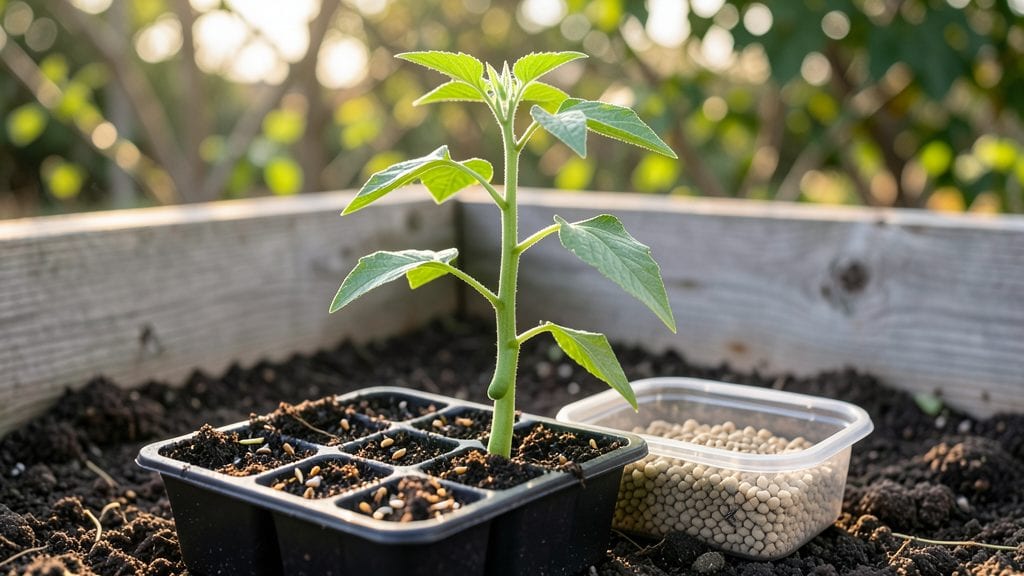
The definition of seed coating is a specialized protective layer designed to boost seed performance by improving germination rates, disease resistance, and nutrient absorption while making seeds easier to handle and plant. These coatings typically incorporate polymers, fertilizers, or fungicides to create ideal growing conditions.
Seed coatings act like a tiny shield for seeds, protecting them from environmental stressors like drought or soil-borne pathogens. 🌱 They also help regulate moisture levels, ensuring seeds stay hydrated until they sprout, which is especially critical for lawn seeds that face harsh conditions.
Many commercial coatings even include slow-release nutrients, giving young plants a head start. This technology isn't just for professionals—home gardeners can benefit from pre-coated seeds that require less aftercare and yield stronger, more uniform growth.
What makes seed coatings particularly valuable is their ability to standardize planting. Without coatings, seeds vary in size, weight, and germination rates, leading to patchy lawns or gardens.
Coated seeds eliminate these inconsistencies by providing uniform coverage and protection, which is why you'll see them in most high-quality turf and vegetable seed mixes. The best part? These coatings often break down naturally in the soil, leaving no harmful residues behind.
💡 In This Article
- How Seed Coatings Improve Germination Rates
- Types of Seed Coatings and Their Uses
How seed coatings improve germination rates
Seed coatings work like a microscopic climate control system for seeds. The key mechanism involves regulating moisture and oxygen exchange—critical factors for breaking dormancy. Polymer-based coatings, for example, create a semi-permeable barrier that prevents desiccation while allowing controlled water vapor exchange.
Studies show coated seeds maintain 95-98% moisture retention compared to 70-80% for uncoated seeds in dry conditions, which directly translates to faster germination. The science here involves hydrophilic polymers that swell slightly when exposed to moisture, forming a protective gel layer around the seed.
Oxygen flow is another critical factor where coatings excel. Uncoated seeds often suffocate when buried too deeply or in compacted soil, but coatings like clay or gel-based formulations create micro-channels that maintain optimal gas exchange.
Research from the University of Nebraska found that coated lawn seeds germinated 2-3 days faster than uncoated varieties when planted in heavy clay soil. This happens because the coatings prevent anaerobic conditions (oxygen deprivation) that would otherwise trigger seed rot or delayed sprouting.
The physical structure of these coatings—often with 10-20 micron pore sizes—strikes a balance between protection and respiration.
Nutrient delivery through coatings is where the real growth advantage appears. Many commercial coatings incorporate slow-release fertilizers (like urea-formaldehyde or sulfur-coated urea) that begin dissolving only after germination begins.
This timing is crucial—young seedlings are particularly vulnerable to nutrient deficiencies, and coatings provide a 3-6 week buffer of essential nitrogen, phosphorus, and potassium.
For instance, a 1% polymer coating with 5% urea can deliver enough nitrogen to support early root development without overwhelming the seedling, which would happen with direct soil fertilization.
The results speak for themselves when comparing coated vs. uncoated seeds in controlled trials. A 2021 study in HortScience demonstrated that coated turfgrass seeds achieved 85% germination within 10 days compared to 60% in 14 days for uncoated seeds under identical conditions.
The coated seeds also produced seedlings with 30% stronger root systems, thanks to the combined effects of moisture regulation, disease protection, and early nutrient availability. This isn't just about speed—it's about creating seedlings that are biologically robust from the start.
What most gardeners don't realize is how coatings interact with soil temperature. The semi-permeable nature of polymer coatings helps maintain a more stable microclimate around the seed, preventing temperature fluctuations that can shock embryonic tissues.
In cooler spring conditions (50-55°F), coated seeds often germinate 5-7 days earlier than uncoated varieties because the coating acts as a thermal buffer. This temperature regulation is particularly valuable for lawn seeds, which frequently face inconsistent soil temperatures during planting season. 🌱
For practical application, this means choosing coatings tailored to your climate. In arid regions, polymer coatings with high moisture retention are ideal, while in humid areas, fungicide-infused coatings prevent damping-off disease.
The right coating can literally mean the difference between a thin, patchy lawn and one that establishes uniformly within 2-3 weeks. The investment in coated seeds pays off not just in faster germination, but in the long-term health of your plants.