Trees
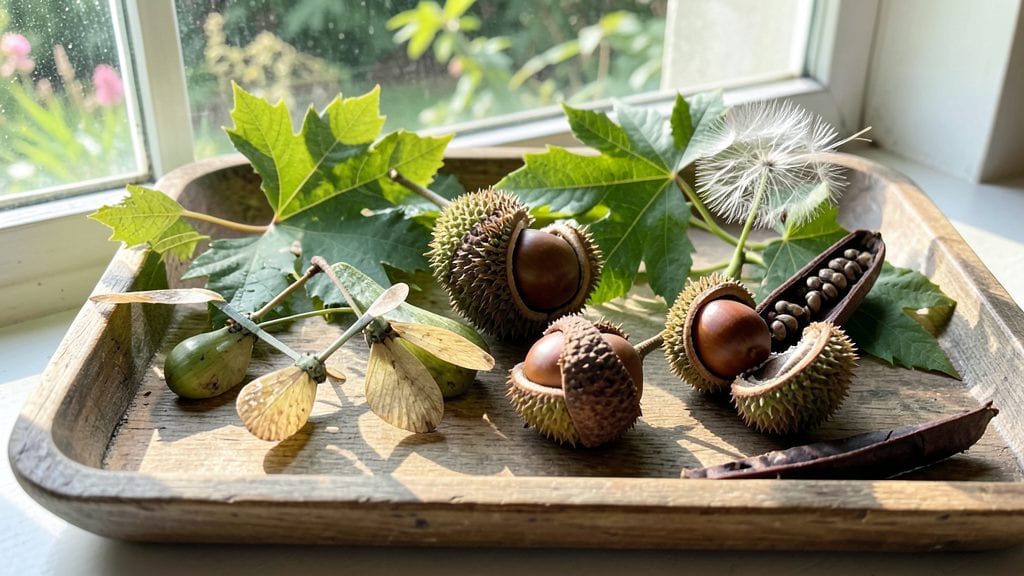
To identify tree seed pods with confidence, start with the identification of their key traits—shape, size, and texture—then you’ll spot them everywhere. 🌿 I’ve spent years collecting pods in my backyard, and the key is focusing on those details rather than... than guessing.
A smooth, winged pod? Probably a maple. A spiky, woody cone? Likely a pine. The wrong guess can lead to frustration, but the right ID opens up a whole new way to explore trees in your area.
This guide breaks down the most common pods you’ll find—acorns, samaras, pine cones, and more—with clear descriptions of their unique features. We’ll cover where to hunt for them (under oaks in fall, near maples in spring) and how to use free apps or simple field guides to double-check your finds.
No prior experience needed—just curiosity and a sharp eye.
By the end, you’ll recognize pods instantly and even predict which trees they came from just by looking. Imagine walking through a park and knowing every oak, hickory, or walnut tree without a label. The best part? You’ll start noticing patterns in your own neighborhood that most people miss entirely.
We’ll also touch on safety—some pods are harmless, while others can be toxic if ingested—so you can enjoy the hunt without worries. Grab a bag and let’s get started!
Nature’s Design Behind Seed Pods
Seed pods are far more than just decorative elements on trees—they’re a masterpiece of evolutionary biology, designed to ensure the survival of their species. Understanding why these pods form and function the way they do helps you appreciate the intricate strategies trees use to spread their seeds.
Here’s a breakdown of the key reasons behind their existence and behavior.
Seed pods are primarily an adaptation to maximize seed dispersal and germination. Trees have evolved diverse pod structures to outsmart predators, weather, and competition:
- Dispersal Mechanisms: Many pods rely on wind, water, or animals to transport seeds away from the parent tree. For example, maple pods (samaras) have winged structures that spin like helicopters, while burdock pods latch onto fur or clothing. These designs reduce competition among seedlings by spreading them over wider areas.
- Timing Triggers: Some pods only release seeds under specific conditions—like drought, freezing, or fire. Bottlebrush trees (e.g., Callistemon) release seeds when exposed to heat, mimicking bushfire conditions that clear competing vegetation.
- Seed Viability: Pods protect seeds from harsh environments until conditions are ideal. Acacia pods, for instance, stay closed until moisture signals their chance to germinate, ensuring seeds don’t sprout in dry spells.
Climate and geography play a huge role in pod development. Trees in arid regions or high altitudes often produce pods with thick, woody walls or delayed release to conserve water and energy:
- Water Scarcity: Deserts like the Southwest U.S. host trees (e.g., mesquite) with pods that crack open only after heavy rains, giving seeds a brief window to germinate before drying out.
- Temperature Extremes: Cold-climate trees (e.g., birch) release seeds in early spring when soil is thawed but not yet crowded by other plants.
- Soil Conditions: Pods from trees like black locust may only split when soil nutrients are high, timing seed release with optimal growing conditions.
Some pods are co-evolved with animals or humans, relying on them for dispersal. These relationships shape pod structures in unexpected ways:
- Animal Foraging: Horse chestnut pods have spiky exteriors that deter most herbivores but release edible seeds when ripe, attracting squirrels and birds. Lotus pods, meanwhile, explode when touched, launching seeds up to 50 feet!
- Human Agriculture: Crops like peas and beans (technically legume pods) have been selectively bred for easy harvesting, but wild relatives often have tougher pods to evade predation.
- Seed Banking: Some pods (e.g., lupine) form hard shells that remain dormant for years, waiting for disturbances like landslides or logging to expose them to sunlight.
Pod development is hardwired into a tree’s DNA, influenced by hormones and growth regulators:
- Hormonal Cues: Ethylene gas triggers pod maturation and splitting in many species. For example, poppy pods rely on ethylene to burst open when dry.
- Genetic Variability: Hybrid trees (e.g., honey locust) may produce pods with inconsistent shapes or sizes due to mixed genetic traits from parent trees.
- Age and Health: Older trees or those under stress (disease, drought) may produce malformed pods. Oak trees, for instance, often yield fewer acorns in drought years, prioritizing survival over reproduction.
By recognizing these underlying causes, you can predict how a pod will behave—whether it’ll cling to a branch for months, explode dramatically, or drift away on the wind. Next time you spot a seed pod, ask yourself: What’s its secret mission? 🌿
Practical steps to identify seed pods
Staring at a mysterious seed pod and wondering, "What tree dropped this?" can feel like solving a botanical puzzle. But with the right approach, you can crack the case—whether you're a gardener, a nature enthusiast, or just curious about the trees in your yard.
Below, we’ll break down practical, step-by-step solutions to match seed pods to their parent trees, along with tips to prevent future guesswork.
The first clue lies in the pod itself. Grab a magnifying glass (or your phone’s camera) and inspect these key features:
- 🌿 Shape & Size: Is it long and slender (like a maple samara), round and spiky (like a sweetgum), or flat and winged (like an ash key)?
Measure it if needed—some pods are only a few millimeters wide, while others stretch over an inch. - 🎨 Color & Texture: Fresh pods might be green, brown, or even vibrant (think of the fiery red of a horse chestnut).
Dry pods often turn papery, leathery, or woody. Run your fingers over it—is it smooth, bumpy, or covered in fine hairs? - 💡 Pro Tip: Take a photo of the pod against a white background or next to a common object (like a penny) for scale.
This makes comparisons easier later.
Now that you’ve documented the pod’s traits, it’s time to match it to a tree. Here’s how:
- 📱 Use Identification Apps: Apps like PictureThis, LeafSnap, or iNaturalist let you upload photos of the pod (and sometimes the tree’s leaves or bark) for instant ID.
Many are free and work offline! - Example: Snap a photo of a fuzzy, brown pod with a maple-like shape, and the app might suggest it’s from a boxelder tree.
- 📖 Consult a Field Guide: Books like “Peterson Field Guide to Trees and Shrubs” or “The Tree Book” by Gina Ingoglia include detailed illustrations of seed pods.
Flip to the section on fruit/seeds and scan for matches. - Pro Tip: Look for pods in the same season they appear—many trees release pods in fall, but some (like dandelions) pop up in spring.
- 🌳 Check Local Resources: Your state’s agricultural extension office or local arboretum often has databases of native trees and their pods. Some even offer free ID services!
If you found the pod on the ground, the next step is detective work:
- 🚶♂️ Follow the Trail: Seed pods rarely travel far from their parent tree.
Walk in a straight line away from where you found the pod, scanning the bark, leaves, and branches for clues. - Look for: - Leaves still attached or nearby (pods often fall when leaves are present). - Bark patterns (e.g., smooth gray bark = birch; deep furrows = sycamore). - Other fruit (e.g., acorns, pinecones, or berries).
- 📅 Note the Season: Some pods are seasonal. For example:
- Fall pods: Oak acorns, sweetgum balls, or hickory nuts.
- Spring pods: Dandelion puffs or willow catkins.
- Year-round pods: Pinecones (though they may drop more in winter).
- 💡 Pro Tip: If you’re near a known tree (like a maple or oak), shake the branches gently—you might hear or see pods falling. This is a foolproof way to confirm!
If the pod still stumps you, eliminate possibilities:
- ❌ Cross off trees that don’t match: - A winged pod? Not from a pine (those are cones). - A spiky ball?
Probably not from a fruit tree (like apple or pear). - ✅ Focus on likely candidates: - Flat and papery? Could be a linden (basswood) or ash. - Hard and woody? Might be an oak or hazelnut.
- 🌍 Consider Your Location: Some pods are region-specific. For example:
- Southern U.S.: Sweetgum, mimosa, or pecan pods.
- Pacific Northwest: Douglas fir cones or bigleaf maple samaras.
- Northeast: Horse chestnut or black walnut husks.
Once you’ve mastered pod ID, keep a tree journal to stay ahead:
- 📸 Take “Before & After” Photos: Snap pictures of the tree, leaves, and pod together. Label them by date and location. - 🗓️ Track Pod Seasons: Note when pods appear in your area.
For example, if you see elm samaras in March, you’ll know to watch for them next year. - 🌱 Plant Known Trees: If you love a specific pod (like the dramatic sweetgum ball), plant the tree!
Nurseries often sell saplings labeled with their mature traits. - 📚 Build a Reference Library: Keep a physical or digital folder of pod images, field guide pages, and app screenshots for quick lookup.
Remember: Even experts get stumped sometimes. If all else fails, post your photo on forums like Reddit’s r/whatsthisthing or iNaturalist—the community will likely chime in with the answer!
Frequently asked questions
What are the most common tree seed pods I’ll find in my backyard?
Start with these easy-to-spot pods: acorns (oaks), maple samaras (winged helicopter seeds), pine cones (evergreens), and elm samaras (flat, papery wings). Sweetgum balls (spiky green spheres) and hickory nuts in hard shells are also widespread. Check under trees in fall—they’re everywhere!
How do I tell the difference between a maple samara and an elm samara?
Maple samaras have two wings that form a V-shape, while elm samaras have one broad wing (like a single paper airplane). Maples also grow in pairs along the stem, while elms attach singly. Hold them up to light—elm wings are thinner and more delicate.
Are there any seed pods I should avoid touching?
Yes! Horse chestnut pods contain toxic seeds (if ingested), and black walnut husks release a chemical that stains and irritates skin. Always wash hands after handling unknown pods, and never eat seeds unless you’re 100% sure they’re safe (e.g., hazelnuts or pecans).
Can I use seed pods to identify a tree if I only have a photo of the pod?
Apps like PictureThis or iNaturalist let you upload pod photos for instant matches. For best results, include the pod’s size (next to a coin), color, and texture. If you’re unsure, post to forums like Reddit’s r/whatsthisthing—experts often chime in within hours!
Why do some seed pods explode when dry?
Pods like lupine or touch-me-not use explosive mechanisms to launch seeds away from the parent plant. When dry, their tissues shrink unevenly, creating pressure that bursts the pod open—like a tiny cannon! This ensures seeds land far from competitors, boosting survival rates.