Propagation
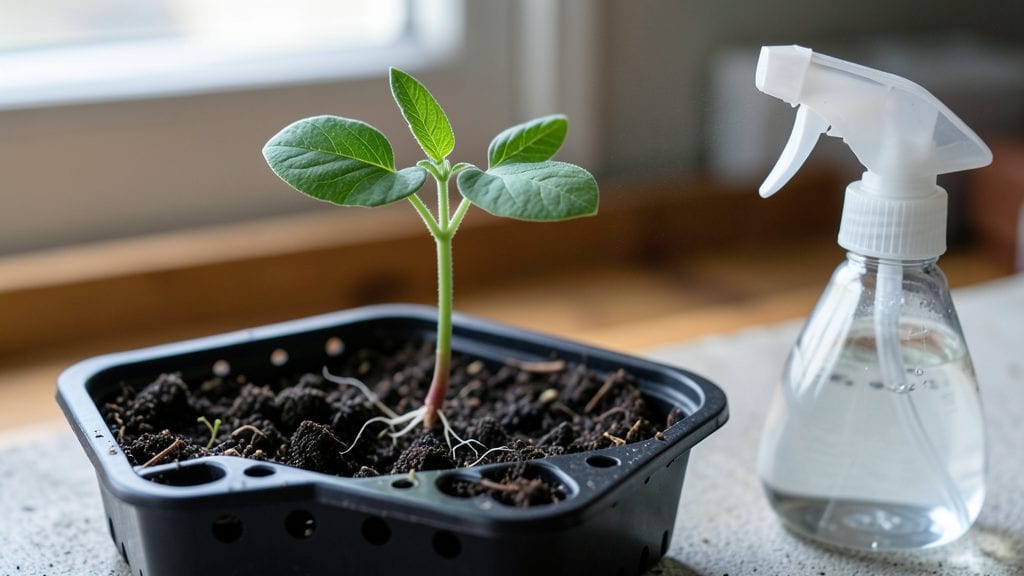
Germination is essentially the awakening of a seed's dormant life cycle, where it transitions from a stored energy state to active growth. 🌱 This process kicks off when seeds absorb moisture, triggering metabolic reactions that produce enzymes to break down stored nutrients.
The right balance of warmth and airflow then encourages roots (radicles) to emerge first, followed by shoots that push toward light. Without these key conditions, seeds may rot or fail to sprout entirely—making environmental control critical for success.
What's fascinating is how different seeds have unique germination triggers. Some, like tomatoes, need light to sprout, while others, such as beans, prefer darkness. Temperature also plays a starring role—cool-season crops like lettuce germinate best at 60-70°F, while tropical varieties thrive at 75-85°F.
Even the seed's age matters: older seeds often germinate slower or less reliably, which is why many gardeners store them in cool, dry places to preserve viability.
💡 In This Article
- The Science Behind Seed Germination Stages
- Optimal Germination Conditions for Different Seed Types
The science behind seed germination stages
Here's what's actually happening when a seed germinates: it's a carefully orchestrated biological sequence where the seed transitions from a metabolically inactive state to active growth.
The process begins with imbibition, where the seed absorbs water through its seed coat, swelling up to 120-150% of its original weight within hours. This water triggers the seed's metabolic machinery, activating enzymes that break down stored starches into simple sugars for energy.
Think of it like waking up from hibernation—suddenly, the seed's cells are buzzing with activity after months of dormancy. 🔥
The next critical phase is enzyme activation, where specific proteins called amylases and proteases get to work. These enzymes convert starches into glucose and proteins into amino acids, fueling the seed's growth.
For example, in a bean seed, the cotyledons (seed leaves) contain about 30-40% starch by weight—this gets rapidly converted during germination. Meanwhile, the seed's mitochondria (the powerhouses of cells) ramp up oxygen consumption by 5-10 times to support this energy-intensive process.
Without proper oxygen flow, the seed suffocates, which is why well-draining soil is essential.
Once the energy reserves are mobilized, the radicle (embryonic root) emerges first, typically within 3-7 days depending on the species. This root grows downward, anchoring the seedling and beginning water and nutrient uptake.
What's fascinating is how the radicle's growth is guided by gravitropism—a response to gravity that ensures it grows toward the soil. Meanwhile, the hypocotyl (the stem below the cotyledons) starts elongating, pushing upward toward light.
In some seeds like peas, this process creates the classic "hook" shape that straightens as the shoot emerges. 🌱
Light plays a surprisingly nuanced role here. Some seeds, like lettuce, require light to germinate (photoblastic seeds), while others, like beans, germinate better in darkness. This is because different species have evolved to avoid competition—shade-tolerant plants sprout below ground cover, while sun-lovers need light to trigger growth.
Temperature also acts as a regulator: most seeds have an optimal range (often 68-86°F), but extremes can damage enzymes. For instance, freezing temperatures denature proteins, while excessive heat (>95°F) can cause cellular dehydration.
Consider how a sunflower seed handles these stages: its hard outer shell cracks open when imbibed, the radicle grows downward at about 1-2 mm per day, and the hypocotyl elongates rapidly to reach sunlight.
Meanwhile, the cotyledons (which were the seed's food supply) begin photosynthesis just as the first true leaves emerge. This entire process is finely tuned—if any stage fails, the seedling won't survive.
For example, if a seed lacks sufficient moisture during imbibition, the enzymes won't activate properly, and the seed remains dormant. 💫
The final stage is autotrophy, where the seedling transitions from relying on stored nutrients to producing its own food via photosynthesis. This happens when the first true leaves (not the cotyledons) emerge and contain chlorophyll.
At this point, the seedling's growth rate accelerates, and it becomes less dependent on environmental conditions. Understanding these stages helps explain why some seeds sprout quickly (like radishes in 5-7 days) while others take weeks (like oak trees, which can take 2-3 months due to their deep dormancy requirements).