Lawn
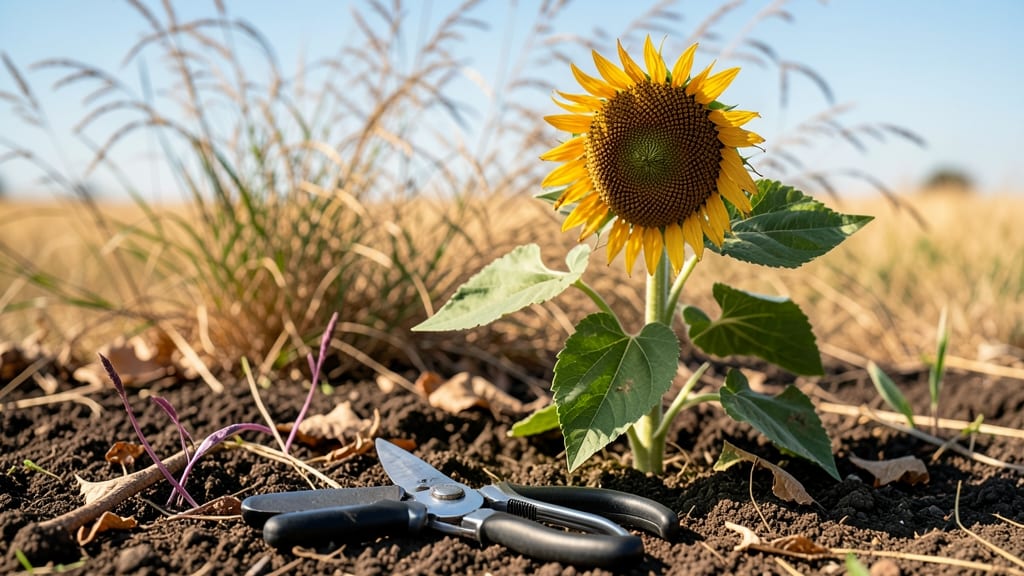
Sunflower seeds come in surprising diversity, and these traits actually serve specific purposes. 🌻 The thick shells of varieties like 'Russian Mammoth' protect seeds better for long-term storage, while thinner shells on 'Autumn Beauty' make them easier to crack for snacking.
Shell color isn't just cosmetic—black stripes often indicate higher oil content, which is why you'll find them in commercial sunflower oil production.
Even the seed's surface texture tells a story: smoother seeds tend to be from varieties bred for confectionary use, while rougher textures often belong to oil-seed types designed for mechanical processing.
What's fascinating is how these physical traits connect to the plant's growth habits. For example, the 'ProCut' variety—common in cut-flower gardens—produces seeds with different shell characteristics than those grown for bird feed.
If you're trying to identify seeds from your garden, checking the plant's leaf shape and stem thickness alongside the seeds can give you crucial clues about the cultivar.
Many gardeners swear by keeping a small reference chart of common varieties nearby during harvest season to avoid mix-ups between edible and ornamental types.
💡 In This Article
- Key Physical Traits of Sunflower Seeds
- How to Tell Sunflower Seed Varieties Apart
Key physical traits of sunflower seeds
Sunflower seeds exhibit remarkable diversity in their physical characteristics, which directly correlate with their intended use.
The shell thickness, for instance, varies dramatically between varieties: oil-seed types like 'NuSun' typically feature shells that are 0.3-0.5mm thick, designed to withstand mechanical processing, while confectionary varieties such as 'Russian Mammoth' have shells 0.7-1.0mm thick to protect the edible kernel during storage.
This structural difference isn't arbitrary—it's a genetic adaptation. 🔥 Oil-seed varieties prioritize yield over shell protection because their seeds are processed industrially, whereas confectionary types need durable shells to survive handling by consumers.
The color patterns on sunflower seed shells also serve functional purposes. Black-striped varieties like 'Russian Mammoth' contain higher levels of chlorophyll pigments in their shells, which correlates with 20-30% higher oil content compared to white or gray varieties.
This isn't just about appearance—the dark pigments act as natural UV protectors, preserving the seed's nutritional quality during outdoor storage.
The grooves and ridges you see on some seeds, particularly in varieties like 'Autumn Beauty,' serve as stress-relief patterns that form during the drying process, preventing shell cracking as moisture evaporates. These physical adaptations ensure the seed maintains its structural integrity while transitioning from the plant to storage.
Seed size provides another crucial identification clue. Confectionary types typically produce seeds measuring 12-18mm in length, with kernels that make up 60-70% of the total seed weight, ideal for easy cracking by hand.
In contrast, oil-seed varieties like 'NuSun' have seeds that are 8-12mm long with kernels comprising only 40-50% of the weight, maximizing oil yield per unit volume. This size difference isn't just about genetics—it's an agricultural optimization.
The smaller oil seeds pack more tightly in storage silos, while the larger confectionary seeds are easier for birds to handle when used as feed. 💫
Surface texture reveals even more about a seed's purpose. Smooth-surfaced seeds like those from 'Autumn Beauty' are bred for direct human consumption, as their lack of roughness makes them more pleasant to eat.
Rougher-textured seeds, common in varieties like 'Mordovia,' are often used for bird feed or industrial processing because their irregular surfaces help prevent seed loss during mechanical handling.
The texture difference stems from variations in the seed coat's cuticle layer thickness—smooth seeds have thinner cuticles that allow for easier cracking, while rough seeds develop thicker cuticles that resist shell damage during processing.
What most people don't realize is how these physical traits connect to the plant's growth cycle. For example, varieties bred for early harvest—like those used in commercial sunflower oil production—often develop seeds with slightly thinner shells because they're harvested before full maturity to maximize oil content.
Conversely, varieties grown for late-season harvest, such as many confectionary types, develop thicker shells as a natural response to extended exposure to drying conditions. This timing-based adaptation explains why you'll often find thicker-shelled seeds in varieties that mature later in the growing season. ✨
Consider this practical application: if you're trying to identify seeds from a wild sunflower patch, look for these key correlations:
- Thick shells + black stripes: Likely a confectionary or bird feed variety (e.g., 'Russian Mammoth')
- Thin shells + smooth surface: Probably an oil-seed type (e.g., 'NuSun')
- Large size + prominent grooves: Often a specialty confectionary variety
- Small size + rough texture: Typically an industrial oil-seed type