Propagation
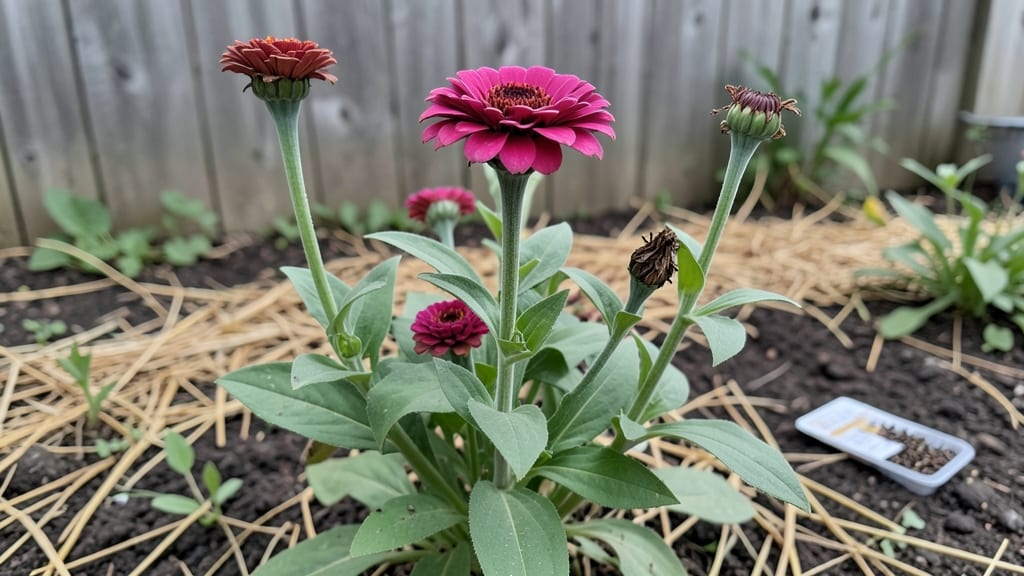
Viable zinnia seeds maintain strong germination potential for 2–4 years if stored properly in cool, dry conditions. Test freshness by floating seeds in water—viable seeds sink within 30 seconds, while old or dead seeds stay afloat. Conduct a moisture test by cutting a seed open to check for a firm, plump interior.
Zinnia seeds lose viability faster than many gardeners realize due to their thin seed coats, which make them especially sensitive to moisture and temperature swings. 🌱 The water float test works because viable seeds contain dense, moisture-rich embryos that sink immediately, while dry or dead seeds lack this internal structure.
For extra precision, I recommend pairing this test with a quick cut—fresh seeds should feel firm and heavy, while old ones will appear shriveled or hollow inside.
Proper storage is key to extending seed life. Keep them in a sealed container with a silica gel packet or uncooked rice to absorb excess moisture, and store in a refrigerator or cool basement where temperatures stay between 35–40°F.
This slows the breakdown of enzymes that trigger germination, giving you that extra year or two of planting potential.
💡 In This Article
- How Zinnia Seed Viability Declines Over Time
- Step-by-Step Zinnia Seed Germination Tests
How zinnia seed viability declines over time
Zinnia seeds degrade through three primary biological processes: moisture loss, lipid oxidation, and enzyme degradation. The thin seed coat makes them particularly vulnerable to desiccation, where internal moisture evaporates at a rate of about 1-2% per month in average room conditions.
This dehydration causes the embryo to shrink, reducing its metabolic activity and ability to activate when planted. 🔥 What's surprising is that even seeds appearing visually intact can fail to germinate because the internal damage isn't visible externally.
The real villain is lipid oxidation in the seed's fatty acids, which accelerates at temperatures above 70°F. These fats break down into toxic peroxides that inhibit enzyme function, particularly those responsible for breaking down stored starches into energy during germination.
Humidity above 50% creates the perfect storm—moisture enables fungal growth while also triggering premature metabolic activity that exhausts the seed's energy reserves before planting. This is why seeds stored in damp basements often lose viability in just 6-12 months, compared to 2-4 years in proper conditions.
Store-bought zinnia seeds typically have 90%+ viability at purchase but decline by 10-15% annually under ideal storage. Home-saved seeds start with 80-85% viability due to handling during harvest but degrade faster—losing 20% viability per year—because they often experience wider temperature fluctuations during drying and storage.
The key difference lies in the drying process: commercial seeds are professionally dehydrated to 5-7% moisture content, while home-savers often leave seeds at 10-12% moisture, accelerating deterioration.
Here's what happens at the cellular level: viable zinnia embryos contain active mitochondria that produce ATP (energy) when exposed to water. As seeds age, these mitochondria degrade, reducing ATP production by up to 40% after 3 years.
The seed's protective proteins also denature, leaving the embryo vulnerable to oxidative stress. This explains why some old seeds might sprout briefly but fail to develop into healthy plants—they lack the energy reserves for complete germination. 💫
Temperature extremes create dramatic differences: seeds stored at 35-40°F maintain viability for 4+ years, while those kept at 75°F drop below 50% viability in just 18 months. The enzyme alpha-amylase, crucial for breaking down starches, becomes inactive after 3 years at room temperature.
This biological clock explains why gardeners often see sudden germination failures in their seed collections after what seemed like proper storage.
Visual clues often lag behind biological decline. A seed might look plump and dark but contain an embryo that's only 30% its original size internally. The float test reveals this because viable embryos contain dense starch granules that sink immediately, while degraded embryos lack this density.
This is why I always recommend cutting open a few seeds—fresh ones feel like tiny marbles, while old ones crumble like chalk. ✨
The good news is that even seeds showing 10-20% viability can sometimes be revived with a cold stratification treatment (soaking in water for 12 hours followed by 7 days in the fridge). This tricks the seed into thinking it's experienced winter, resetting some metabolic pathways.
For maximum success, combine this with a sugar solution (1 tsp sugar per cup water) to provide quick energy for dormant embryos.