Pruning
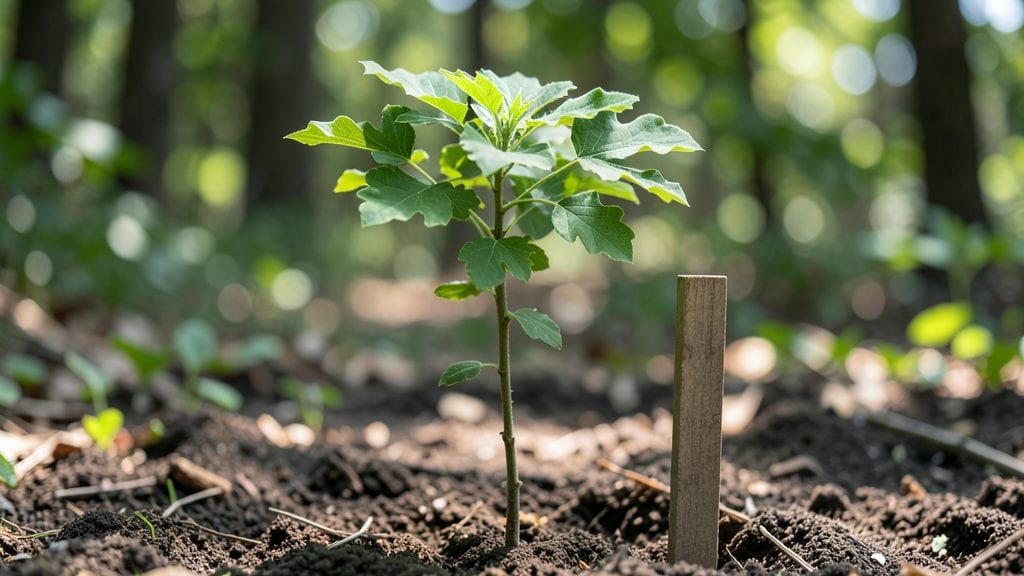
Mastering tree seedling identification from tiny leaves and skinny stems saves you from planting the wrong species—and years of regret. 🌱 I once bought a "shade tree" that grew into a 30-foot sun-loving monster, blocking my whole backyard.
The difference between a future oak and a future headache often comes down to counting leaflets or checking bark texture.
Start with the leaves: maple seedlings have opposite pairs of lobed leaves, while oak seedlings grow in clusters of 5-9 smooth-edged leaflets. Bark color matters too—birch seedlings show horizontal lenticels (those little raised dots) even as babies, while pine seedlings have needle clusters and a woody base.
Grab a magnifying glass and a field guide for close-ups, or use a free plant ID app to snap photos for instant matches.
You’ll spot the right species early enough to replant misidentified seedlings before they take root. Correct ID means proper spacing (oaks need 50 feet apart, while dogwoods thrive in tight clusters) and the right soil mix (acid-loving pines vs. lime-tolerant maples).
Even pruning habits change—some trees need early shaping, others resent any cuts before age 5.
Regional variations throw beginners off: a sweetgum seedling in the South looks nothing like one in the Northeast. Check your local extension office’s tree ID chart or join a gardening forum to compare notes. The payoff? A mature tree that fits your yard’s vision, not your neighbor’s.
Mistakes That Confuse Seedlings
Understanding why tree seedling identification can be tricky starts with recognizing the common pitfalls that trip up even experienced gardeners. Whether you're a novice or a seasoned green thumb, these factors can turn a simple task into a guessing game.
Let’s break down the real culprits behind the confusion—so you can spot them (and avoid them) like a pro.
Seedlings often share broad, simple leaves early in life, making them look eerily similar at first glance. But here’s the catch: leaf shape, edge texture, and vein patterns are the real giveaways.
For example: - Maple seedlings might start with lobed leaves, but their serrated edges and opposite branching (two leaves per node) set them apart. - Oak seedlings often have bristle-tipped lobes and alternate leaf arrangements, while birch seedlings sport doubly serrated, triangular leaves with a fine, papery texture.
Why it happens: Young leaves haven’t fully developed their mature characteristics, so you’re left comparing subtle differences. Pro tip: 💡 Use a magnifying glass to inspect leaf edges and vein structures—details like hairiness or glandular dots can be game-changers.
Leaves aren’t the only story—stem structure, bark texture, and growth patterns play a huge role.
For instance: - Pine seedlings have needle clusters (fascicles) and scaly bark, while cedar seedlings grow in flat, scale-like leaves arranged in opposite pairs. - Willow seedlings shoot up with long, slender stems and narrow, fuzzy leaves, unlike poplar seedlings, which have heart-shaped leaves and smooth, fast-growing stems.
Why it happens: Many guides focus solely on leaves, but stem and bark traits are often the easiest way to distinguish seedlings when leaves are still too small or damaged. Pro tip: 🌡️ Run your fingers along the stem—rough, ridged, or peeling bark can reveal the species faster than a leaf key.
Stress from drought, pests, or disease can warp a seedling’s natural appearance, making identification a wild goose chase.
For example: - Drought-stressed seedlings may develop smaller, curled leaves or premature browning, mimicking a different species entirely. - Pest damage (like aphids or spider mites) can cause stunted growth, discoloration, or deformed leaves, masking true traits. - Shade-grown seedlings might produce lighter, thinner leaves compared to their sunlit counterparts.
Why it happens: Environmental factors trigger physiological responses that alter growth patterns. A healthy white oak seedling might look nothing like one struggling under a canopy. Pro tip: ✨ Compare stressed seedlings to healthy reference photos—look for consistent traits that persist despite conditions.
Size matters—but not in the way you think. A 1-foot-tall seedling might be a fast-growing species (like a sycamore) or a slow starter (like a redwood). Meanwhile, a 6-inch seedling could be a mature-looking oak or a young pine with its first needles.
Why it happens: Growth rates vary wildly by species, climate, and soil conditions. Pro tip: 📊 Cross-reference height with other traits—like root structure or bud shape—before making a call.
Some seedlings are hybrids (crosses between species) or cultivars (selectively bred varieties), blending traits that don’t match standard guides.
For example: - A red maple × silver maple hybrid might have lobes from one parent and serrations from another, creating a confusing middle ground. - Dwarf cultivars (like ‘Fastigiata’ columnar oaks) grow differently from their wild counterparts, with denser branching or smaller leaves.
Why it happens: Nurseries often sell grafted or hybrid seedlings, and their traits don’t align with natural species keys. Pro tip: 🎯 Ask for provenance—if the seedling came from a nursery, check their catalog for hybrid labels.
Not all young trees are seedlings! Saplings (older, transplanted trees) and suckers (shoots from roots or stumps) can look deceptively similar but have different growth origins and structures.
For example: - Saplings often have thicker stems and more developed root systems. - Suckers (like those from ash or apple trees) may sprout directly from the ground with no true seedling taproot.
Why it happens: Suckers and saplings lack the epicormic buds (buds along the stem) typical of true seedlings. Pro tip: 🔥 Dig near the base—seedlings have a central taproot, while suckers may lack one.
Seedling identification isn’t just about what you see—it’s about how you observe. By paying attention to leaves, stems, bark, growth habits, and environmental clues, you’ll sharpen your skills faster than you’d expect. And remember: the more you practice, the more patterns you’ll recognize. Happy identifying! 🌿🔬
Fixing Common Seedling ID Challenges
Mistakenly identifying tree seedlings can lead to unintended consequences—like planting invasive species or losing native biodiversity. But don’t worry! With the right tools and techniques, you can turn confusion into confidence. Below, we’ve mapped out practical solutions for the most common issues, from misidentifying leaves to misjudging growth stages.
Problem: Seedlings with similar leaf shapes (e.g., oak vs. maple, pine vs. spruce) can be tricky to distinguish at first glance.
Solution:
- 🌿 Compare Leaf Arrangement & Texture
- Opposite vs. Alternate: Maple leaves grow in pairs (opposite), while oak leaves alternate along the stem.
- Needle vs. Broadleaf: Pines have needles in bundles (2–5 per fascicle), while spruces have sharp, single needles radiating from the branch.
- 📏 Measure & Count Key Features
Feature Oak Seedling Maple Seedling Leaf Lobes 5–9 rounded lobes (varies by species) 5–7 pointed lobes (often with serrated edges) Leaf Base Uneven, often asymmetrical Symmetrical with pointed base - 🌱 Check for Seedling Habit
- Oaks often have bristly hairs on buds and twigs.
- Maples have smooth, shiny buds and milky sap when damaged.
💡 Pro Tip: Use a hand lens (10x magnification) to spot fine details like vein patterns or tiny hairs. A free plant ID app (like iNaturalist or LeafSnap) can cross-check your observations.
Problem: Young trees in early growth stages (cotyledons, first true leaves, or sapling phase) can be mislabeled, leading to incorrect care.
Solution:
- 📅 Timeline Your Observations
Stage Key Traits When to Expect Seedling (0–2 years) Cotyledons (first leaves, often simple and heart-shaped), no woody stem yet. First year after germination. Early Sapling (2–5 years) True leaves appear (compound or lobed), stem begins to lignify (wooden). By year 2–3, depending on species. Late Sapling (5+ years) Clear bark texture, branches form, height >6 ft. Varies by species (fast growers like willows vs. slow oaks). - 🔍 Look for "Telling" Features
- Root System: Seedlings have fibrous roots; saplings develop a taproot.
- Bud Scars: Count annual rings on twigs (each ring = 1 year of growth).
- 📸 Document Progress Take monthly photos of seedlings in your nursery or garden. Compare changes in leaf shape, stem thickness, and height over time.
✨ Prevention Tip: Label seedlings with species tags + date planted. Include a sketch of the first true leaves to reference later.
Problem: Accidentally planting invasive seedlings (e.g., Bradford pear, tree-of-heaven) can harm ecosystems.
Solution:
- 🚨 Check Local Invasive Species Lists
- Visit your state’s Department of Agriculture or invasive species council website (e.g., Invasive Species Specialist Group).
- Bookmark tools like the EDDMapS Early Detection & Distribution Mapping System.
- 🌿 Key Red Flags for Invasives
Species Seedling Traits Native Look-Alike Bradford Pear Simple, oval leaves with serrated edges; strong fragrance when crushed. Native hawthorn (thorny branches, smaller leaves). Tree-of-Heaven Compound leaves with 7–13 leaflets; foul-smelling sap. Native sumac (leaflets in odd-numbered clusters, no foul odor). - 🌱 Test the "Scratch Test"
Scratch the bark or stem with your fingernail. Invasive species like tree-of-heaven often exude a milky or foul-smelling sap, while natives may have clear or neutral sap.
🎯 Prevention Tip: Buy from certified native plant nurseries or seed suppliers. Avoid "cheap" or unlabeled seedlings from roadside stands.
- 📚 Study Local Flora Join a local arboretum or master gardener program to learn regional species. Many offer free workshops on seedling ID.
- 📅 Seasonal Check-Ins
- Spring: Look for new leaf flush and bud break patterns.
- Fall: Observe leaf color changes and seed pod formation.
- 🔧 Toolkit Essentials
Keep these handy for field ID:
- A pruning saw (for cutting samples).
- A field guide (e.g., Peterson Field Guide to Trees).
- A small notebook for sketching details.
🌡️ Pro Tip: If you’re still unsure, send a sample to a local university extension office for expert verification. Many offer free or low-cost services!
Frequently asked questions
How can I tell the difference between oak and maple seedlings?
Look at leaf arrangement and shape: oak seedlings have 5-9 lobed leaves with bristle tips, arranged alternately along the stem. Maple seedlings grow in opposite pairs with 5-7 pointed lobes and serrated edges. Check the stem too—maples have smooth buds while oaks often have hairy twigs.
What tools do I need for accurate seedling identification?
Start with a hand lens (10x magnification) to examine leaf details, a field guide (like Peterson's Trees), and a notebook for sketching. Free plant ID apps like iNaturalist or LeafSnap can cross-check your observations by comparing photos with their database.
Can I identify seedlings by bark texture alone?
Bark is helpful but not definitive for seedlings—young trees often have smooth bark. Focus instead on stem structure (rough vs. smooth) and bud shapes. For example, birch seedlings show horizontal lenticels (raised dots) even as babies, while pine seedlings have needle clusters and woody bases.
How do I know if a seedling is invasive before planting?
Check your state's invasive species list first! Red flags include fast growth rates, aggressive root systems, and unusual traits like foul-smelling sap (tree-of-heaven) or strong fragrance when crushed (Bradford pear). Always buy from certified native plant nurseries to avoid accidental introductions.