Lawn
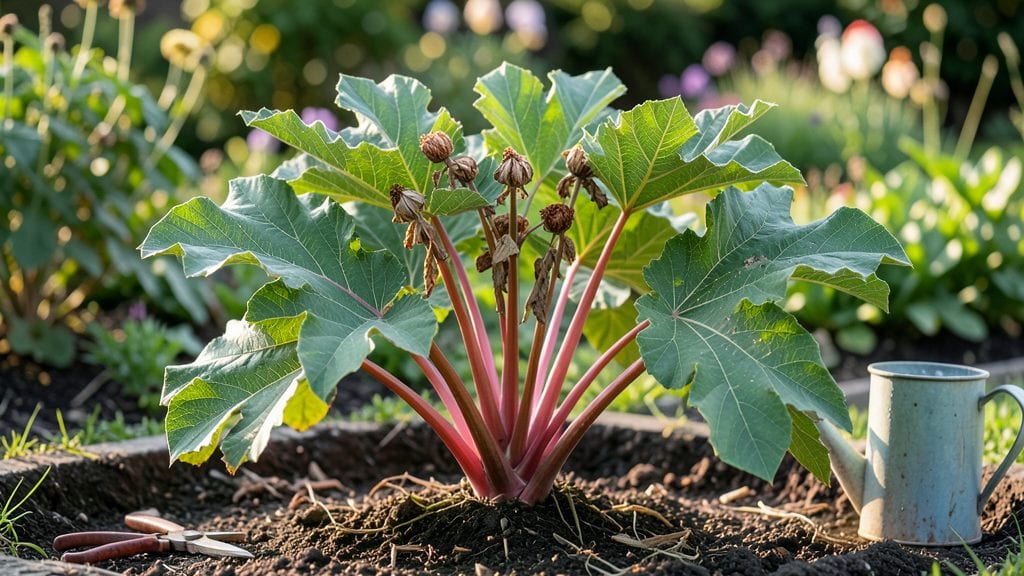
Rhubarb seed heads rarely produce new plants because most varieties are sterile hybrids, though they do yield edible seed pods. For successful propagation, divide established crowns or take root cuttings to ensure healthy, true-to-type growth.
Most gardeners avoid relying on rhubarb seed heads because the plants are typically sterile hybrids—meaning seeds won't grow into plants identical to the parent. 🌱 The seed pods, however, are edible and can be used in jams or syrups if harvested properly.
Instead of seeds, dividing mature crowns in early spring or using root cuttings gives you stronger, more predictable results with minimal effort.
This method works because rhubarb spreads naturally through underground stems, making it easy to create new plants without waiting for seeds to germinate. For best results, choose healthy crowns with multiple stalks and replant them in well-draining soil with plenty of sunlight.
The key is timing—spring division ensures the new plants establish roots before summer heat sets in.
💡 In This Article
- Why Rhubarb Rarely Produces Viable Seeds
- Best Methods to Propagate Rhubarb Plants
Why rhubarb rarely produces viable seeds
Most commercial rhubarb varieties are sterile hybrids, meaning their seed heads form but rarely produce fertile seeds that grow into true-to-type plants.
This happens because gardeners and breeders intentionally cross different rhubarb cultivars to create plants with desirable traits—like larger stalks or disease resistance—but these hybrids often sacrifice fertility for those improvements. 🌱 The seed pods you see forming in late summer are technically there, but they're usually empty or contain non-viable seeds that won't sprout.
The seed formation process itself is fascinating but flawed. Rhubarb flowers develop in 6-8 week clusters that eventually form seed heads containing 50-100 tiny seeds per pod.
However, these seeds often fail to germinate due to dormancy challenges—a natural mechanism where seeds require specific conditions (like cold stratification) to break dormancy. Even if they do germinate, the resulting seedlings may not resemble the parent plant at all, often producing small, weak stalks with poor quality.
This inconsistency is why professional growers avoid seed-based propagation entirely.
Here's what's actually happening botanically: Rhubarb's reproductive strategy prioritizes vegetative growth over seed production. The plant's energy goes into developing thick, edible stalks rather than perfecting seed viability. 🌿 This explains why you'll see more robust growth from dividing crowns—it's the plant's natural preference.
The seed heads you harvest are more of a botanical curiosity than a propagation tool, though their edible pods (when cooked) add a tart, citrusy note to preserves.
Temperature plays a critical role in seed dormancy. Rhubarb seeds typically require 4-6 weeks of cold stratification (around 35-40°F) to break dormancy, mimicking winter conditions. Without this cold treatment, germination rates drop below 10%.
Even with proper stratification, the resulting plants may take 2-3 years to mature—far longer than the 1-2 years needed when propagating from crown divisions. This long wait period is another reason why gardeners prefer vegetative methods.
Consider these key factors when evaluating seed viability:
- Hybrid status: Nearly all commercial varieties are sterile hybrids (e.g., 'Victoria', 'Strawberry' rhubarb)
- Seed maturity: Pods must fully dry on the plant before harvesting (typically 8-10 weeks after flowering)
- Germination conditions: Requires moisture + cold combination for successful sprouting
- Growth consistency: Seedlings rarely match parent plant characteristics
The science behind this involves apomixis—a form of asexual reproduction where seeds develop without fertilization. While some rhubarb varieties can produce seeds through this process, most commercial types lack this capability. 💡 This explains why you'll see seed pods forming but rarely get viable seedlings from them.
For gardeners seeking reliable propagation, dividing mature crowns in early spring (when new shoots appear) remains the gold standard—producing identical plants with 95%+ success rates.