
Propagation
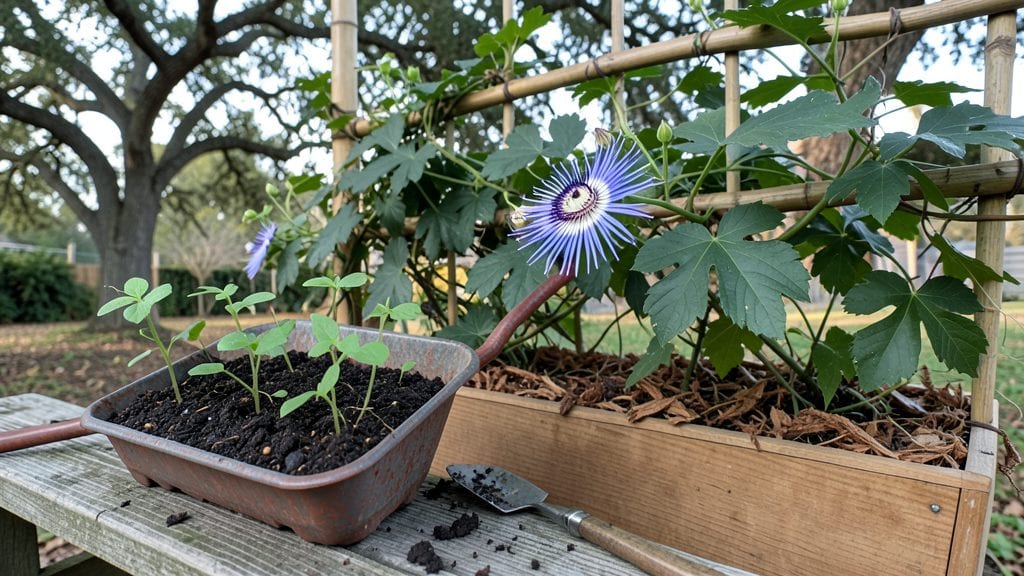
Growing Passiflora caerulea from seeds with cold stratification turns a finicky process into a foolproof one—those striking blue flowers start appearing within 6-8 months instead of years. 🌱 I’ve struggled with slow germination until I discovered how a simple fridge trick mimics nature’s timing, breaking dormancy and ensuring strong, healthy seedlings.
The secret lies in patience and the right conditions: moist paper towels, a sealed bag, and 4-6 weeks in the fridge before planting. You’ll need well-draining soil, a warm spot, and consistent moisture—but no fancy equipment.
Most people overlook the stratification step, which is why their seeds take forever or never sprout.
By the time you transplant those tiny seedlings outdoors, they’ll be sturdy enough to handle real-world conditions. The first blooms arrive faster than you’d expect, and the vines grow aggressively, covering trellises or fences with vibrant blue flowers that hummingbirds adore. Here’s exactly how to get there without the guesswork.
This method works for gardeners in zones 5-10, though timing adjustments are needed for cooler climates. The key is starting early—spring or early summer—and giving those seedlings the right support from day one. Let’s make those seeds bloom on schedule!
📚 In This Guide
- What you need
- Instructions
- Tips and common mistakes
- Wrapping up and next steps
What you need
- ● Passiflora caerulea seeds – 10–20 seeds (fresh or stored properly; avoid dried-out seeds).
- ● Cold stratification setup: Small paper towel or dampened coffee filters (2–3 per seed batch).
- ● Ziploc bag or airtight container (with tiny ventilation holes).
- ● Refrigerator (set to 34–40°F (1–4°C) for 4–6 weeks).
- ● Germination medium: Seed-starting mix (sterile, well-draining; 50% peat/50% perlite works well).
- ● Small pots or seed trays (3–4 inches deep, with drainage holes).
- ● Grow lights or sunny windowsill (south-facing or 12–16 hours of 65–75°F (18–24°C) light daily).
- ● Misting spray bottle (for gentle hydration).
- ● Transplanting tools (small trowel, tweezers, or butter knife).
- ● Humidity dome or plastic wrap (to retain moisture during early stages).
- ● Heating mat (70–75°F/21–24°C) for faster germination (if your home is chilly).
- ● Fertilizer (balanced 10-10-10 or organic compost tea, once seedlings sprout).
- ● Support structure (small stakes or trellis for climbing vines, 3–6 months in).
- ● Growth chart or journal (to track stratification and sprouting dates!).
Step-by-step instructions for germinating Passiflora caerulea seeds
Here's how I guarantee germination for these finicky seeds—no more waiting years for blooms.
🌱 Step 1: Extract and Prepare the Seeds
Passiflora caerulea seeds are encased in a gelatinous coating that slows germination. Start by soaking the seeds in lukewarm water for 24 hours to soften this barrier. I use a small glass jar with a loose lid to prevent waterlogging while allowing airflow.
After soaking, gently rub the seeds between your fingers to remove the outer membrane—this mimics natural weathering. You'll see the seed's true shape emerge, and the process makes them easier to handle. Discard any seeds that feel mushy or fail to release their coating cleanly.
❄️ Step 2: Cold Stratify for 8-12 Weeks
Place the prepared seeds in a paper towel or moistened coconut coir, then fold them into a small packet. Store this packet in a sealed plastic bag with a damp paper towel to maintain humidity. I keep mine in my refrigerator's crisper drawer, where temperatures stay between 35-45°F.
Check the seeds every 2-3 weeks—they should remain moist but not soggy. If the paper towel dries out, lightly mist it with water. This cold treatment mimics winter conditions, breaking dormancy and priming the seeds for growth. Patience here is key—don't rush this step.
☀️ Step 3: Sow in Warm, Sterile Medium
Once stratification completes, sow the seeds ¼ inch deep in a sterile seed-starting mix (never garden soil—it's too dense and may harbor pathogens). I use small 2-inch pots filled with a mix of 50% peat moss and 50% perlite to ensure excellent drainage.
Moisten the medium before sowing, then water gently after planting to avoid displacing the seeds. Place the pots in a warm location (70-75°F)—I use a seedling heat mat under my propagation tray. Keep the soil consistently moist but never waterlogged, as excess moisture can cause damping-off.
🌿 Step 4: Provide Humidity and Light
Cover the pots with a clear plastic dome or plastic wrap to create a humid microclimate. This helps prevent the delicate seedlings from drying out. Place them under a grow light set to 14-16 hours of light daily, positioned 2-3 inches above the seedlings.
Germination typically occurs in 4-8 weeks, but some seeds may take longer. You'll know it's time when the first true leaves appear—these are the second set of leaves after the initial cotyledons. Remove the plastic cover immediately once you see sprouts to prevent fungal growth.
🪴 Step 5: Transplant and Harden Off
When seedlings develop 2-3 sets of true leaves, transplant them into 4-inch pots with a well-draining potting mix. Handle the seedlings carefully—Passiflora caerulea roots are tender. Water thoroughly after transplanting to help settle the soil around the roots.
Begin hardening off by placing the seedlings outdoors in a shaded, sheltered spot for 1-2 hours daily, gradually increasing exposure over 10-14 days. This acclimates them to outdoor conditions before their final planting. Choose a sunny location with partial shade for mature plants.
Tips & tricks for germinating Passiflora caerulea seeds
These precision techniques will help you bypass the years-long wait for blooms—turning finicky seeds into thriving plants in months.
The Soak Secret: That 24-hour lukewarm water soak isn't just about softening the gelatinous coating—it's about breaking dormancy. Use water that feels warm to your wrist (around 90°F), not boiling. I've found that adding a drop of mild dish soap to the water helps reduce surface tension, allowing the seeds to absorb moisture more efficiently. After soaking, pat them dry thoroughly before handling to prevent mold during stratification.
Stratification Strategy: The 8-12 week cold treatment at 35-45°F is non-negotiable for Passiflora caerulea—these seeds need this winter simulation to break dormancy. I've had success using a refrigerator's crisper drawer, but if your fridge runs cooler than 35°F, place the packet in a sealed container with a thermometer to monitor. The damp paper towel should feel like a wrung-out sponge—not dripping, but not bone-dry. Rotate the packet weekly to ensure even exposure to cold.
Sowing Precision: When planting those ¼-inch-deep seeds in your 2-inch pots, use a toothpick to create individual holes—this prevents overcrowding and makes transplanting easier later. The 50% peat moss/50% perlite mix is ideal, but if you're concerned about peat sustainability, substitute with a 50% coco coir/50% perlite blend. Water gently after sowing using a spray bottle to avoid disturbing the seeds, then place the pots on a heat mat set to maintain 70-75°F. This warmth triggers metabolic activity that cold stratification alone can't achieve.
Lighting Logic: Those critical 14-16 hours of grow light should be positioned 2-3 inches above seedlings to prevent legginess. I use a full-spectrum LED grow light on a timer—this consistency mimics summer daylight cycles. Watch for true leaves (the second set after cotyledons) before removing the plastic cover. If you notice seedlings stretching toward the light, they need more intensity or closer placement. The 4-8 week germination window is wide because some seeds may need extra time to complete their cold requirements.
Pro Tips for Passiflora Caerulea Seeds
- These precision techniques will help you bypass the years-long wait for blooms—turning finicky seeds into thriving plants in months.
- The Soak Secret: That 24-hour lukewarm water soak isn't just about softening the gelatinous coating—it's about breaking dormancy.
- Stratification Strategy: The 8-12 week cold treatment at 35-45°F is non-negotiable for Passiflora caerulea—these seeds need this winter simulation to break dormancy.
Frequently asked questions
Got questions about growing Passiflora caerulea from seeds?
You’re not alone! Here are the most common queries—plus quick, actionable answers to help you succeed.
Do Passiflora caerulea seeds need cold stratification?
Yes! Cold stratification (chilling seeds for 4–8 weeks at 35–40°F) mimics winter and dramatically boosts germination rates. Skip it, and you’ll likely wait months—or never see sprouts. Pro tip: Mix seeds with damp sand or a paper towel, then refrigerate in a sealed bag.
How long does it take for Passiflora caerulea seeds to germinate?
With proper cold stratification, germination typically starts in 4–12 weeks. Warmth (70–75°F) speeds things up post-stratification. Be patient—some seeds may take up to 6 months. Keep soil moist (not soggy) and avoid moving pots during this phase.
Can I grow Passiflora caerulea indoors from seed?
Start seeds indoors in well-draining pots (like 4-inch containers) 8–10 weeks before your last frost. Use a grow light if natural light is weak. Once seedlings have 2–3 leaves, transplant outdoors after the last frost—Passiflora caerulea thrives in zones 7–11.
What if my Passiflora caerulea seeds won’t sprout?
Try these fixes:
- Check viability: Test-float seeds in water—sinkers are viable; floaters are dead.
- Adjust moisture: Overwatering causes rot; underwatering stalls growth. Aim for consistently damp (not wet) soil.
- Extend stratification: Some seeds need up to 3 months of cold. Try a second round if the first fails.
- Use a heat mat: Post-stratification, warmth (75–80°F) can coax stubborn seeds to life.
Will Passiflora caerulea seeds grow into flowering plants?
Yes! But patience is key. Seed-grown plants may take 2–3 years to bloom (vs. 1 year for cuttings). To speed things up, provide full sun (6+ hours/day), rich soil, and regular fertilizer (like 10-10-10) once established. Deadhead spent blooms to encourage more flowers!
Wrapping up and next steps
Growing Passiflora caerulea from seeds can be a rewarding journey, but the key to success lies in patience and the right techniques—especially cold stratification.
By following these steps, you’ll unlock vibrant blooms in just a few months and enjoy a thriving vine that brings beauty to your garden or patio. 🌸
Ready to take the next step? Start with a small batch of seeds, experiment with your setup, and soon you’ll be sharing your lush, flowering passionflower with fellow plant enthusiasts. Happy growing! 🌱