Propagation
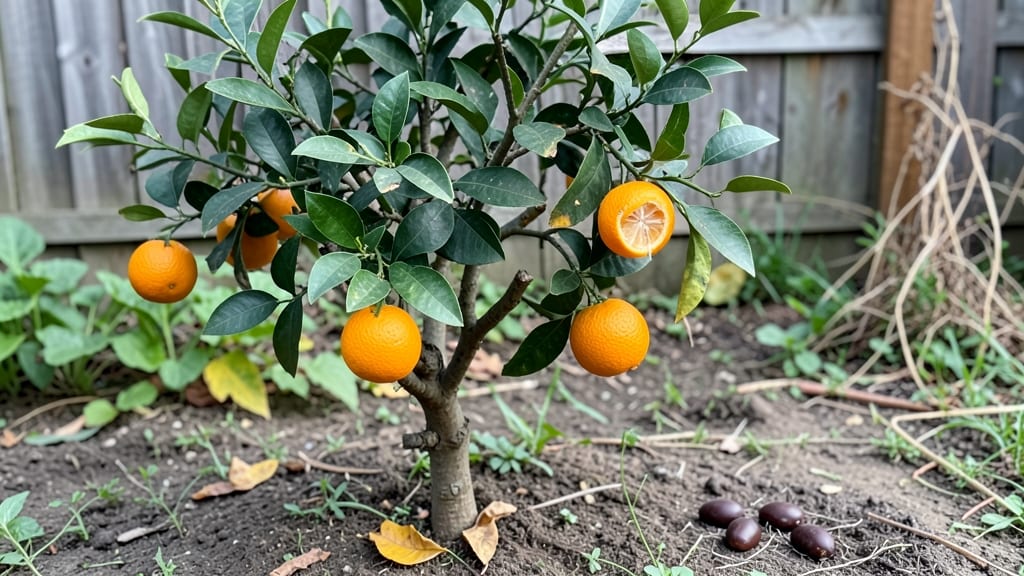
Transform those orange fruit seeds from your navel orange into a fragrant little tree—it’s easier (and more magical) than you’d expect. 🌱 (eventually) fruit, though it’ll take patience and a few tricks to get there.
You’ll need a sunny windowsill or greenhouse space, a small pot with drainage holes, and a mix of potting soil and perlite to keep roots happy. Store-bought citrus seeds often come pre-treated, but seeds from organic oranges work too—just make sure they’re fresh.
The real magic happens when you understand how to break dormancy and encourage those tiny seeds to sprout.
Within 6-8 weeks, you might see your first green shoots, and by year two, you’ll have a small tree that’ll need a larger pot or outdoor planting. It’ll take 5-10 years before you see fruit, but the journey—watering, pruning, and watching it grow—is half the fun.
The fruits won’t be the same as grocery store oranges, but they’ll be sweet, juicy, and uniquely yours.
Fair warning: seed-grown trees often produce different fruit than their parent, and they’re slower to fruit than grafted varieties. But if you’re okay with that, this project turns a simple kitchen scrap into a living piece of your garden’s future. Ready to start?
📚 In This Guide
- What you need
- Instructions
- Tips and common mistakes
- Wrapping up and next steps
What you need
- ● Orange fruit seeds – 3–5 fresh, plump seeds (harvested from a ripe, organic orange for best results). Pro tip: 🌡️ Rinse seeds thoroughly to remove pulp before planting!
- ○ Small pots or containers – 3–4 (4–6 inches in diameter) with drainage holes. Optional: 🔄 Use biodegradable peat pots for easy transplanting!
- ● Well-draining potting mix – A blend of 50% cactus/succulent mix and 50% perlite or coarse sand (or store-bought citrus soil). 💡 Avoid heavy garden soil—citrus roots need airflow!
- ● Spray bottle – For gentle watering (no need for a full watering can!).
- ● Clear plastic wrap or humidity dome – To create a mini greenhouse effect.
- ● Tweezers or toothpick – For carefully placing tiny seeds.
- ○ Heating mat (optional) – Speeds up germination (set to 70–75°F).
- ● Grow lights or sunny windowsill – 6+ hours of bright, indirect light daily.
- ● Fertilizer (after 3 months) – Balanced citrus fertilizer (e.g., 6-6-6 NPK) diluted to half-strength.
- ● Larger pot (1–2 gallons) – For transplanting once seedlings sprout true leaves.
Step-by-step instructions for growing citrus trees from orange seeds
Here's how to turn your kitchen scraps into a thriving citrus tree—no green thumb required.
🌱 Step 1: Extract and Prepare the Seeds
Cut open a fresh, organic orange and scoop out the seeds. Rinse them thoroughly under cool water to remove any pulp, which can rot during germination. I like to spread them on a paper towel and let them air-dry for 12 hours—this prevents mold while keeping them viable.
Once dry, place the seeds in a small container with a damp paper towel. Fold the towel over them and store in a warm, dark spot like a cupboard. Check daily and mist with water if the towel feels dry to the touch. Germination typically takes 2-4 weeks, so be patient.
💧 Step 2: Plant the Germinated Seeds
After the seeds sprout ½-inch roots, it's time to plant. Use a small pot with drainage holes and fill it with well-draining potting mix. Dig a hole about 1 inch deep and place the seed with the root facing downward. Cover it lightly with soil, leaving the sprout exposed.
Water gently until the soil is moist but not soggy. Place the pot in a warm, sunny spot—like a south-facing windowsill—where temperatures stay above 60°F. Avoid cold drafts, which can stunt growth. You'll see the first true leaves in 4-6 weeks, signaling healthy development.
☀️ Step 3: Transplant and Provide Care
Once the seedling reaches 6 inches tall with several leaves, it’s ready for a slightly larger pot. Choose a container with drainage and fill it with fresh potting mix. Dig a hole, place the seedling in, and firm the soil around the base. Water thoroughly to help it settle.
Place the pot in bright, indirect light for the first week to help it adjust. Gradually introduce more sunlight over 10 days. Keep the soil consistently moist but not waterlogged—citrus trees hate soggy roots. Fertilize lightly with a balanced citrus fertilizer every 2 months once the plant is established.
✂️ Step 4: Prune and Train for Growth
When your citrus tree reaches 12 inches tall, it’s time to prune. Use clean scissors to trim back any leggy or overcrowded branches. Focus on shaping the tree and removing dead or weak growth. This encourages a fuller, stronger plant.
Train the tree by gently guiding the main stem upward. If it starts bending, tie it to a small stake with soft twine. Prune again in early spring to remove any winter damage and encourage new growth. With patience, your seedling will grow into a small citrus tree that may even produce fruit in 5-10 years.
Tips & tricks for perfect citrus tree starters
Transforming orange seeds into thriving trees takes patience and a few key tricks—here's how to set yourself up for success.
Germination Environment: That 12-hour drying period is crucial—it prevents mold while keeping seeds viable. For best results, place your seeds in a sealed plastic bag with the damp paper towel to maintain humidity. I've found that a warm spot like above the refrigerator works perfectly, especially if your kitchen runs cool. The goal is to keep the towel consistently damp but not soaking, which can cause rot.
Planting Depth: When planting those ½-inch roots, don't bury them too deep—they need access to light and air. The 1-inch depth recommendation gives you some flexibility: if your soil is particularly dense, plant slightly shallower. I like to use my finger to make the hole and test the depth—it should feel just right for those delicate roots.
Light Transition: The gradual sunlight introduction over 10 days is where many seedlings fail. Start with just 2-3 hours of morning sun, then increase by an hour each day. Watch for yellowing leaves—they're your plant's way of saying "too much sun!" If this happens, move it back to indirect light immediately. A south-facing window is ideal, but east-facing works too if you're in a cooler climate.
Pruning Technique: When your tree hits 12 inches, focus on removing branches that grow inward or cross each other. These compete for sunlight and nutrients. I use small pruning shears and make clean cuts just above leaf nodes. For training, use soft twine—not wire—and check it monthly to ensure it's not cutting into the stem as the tree grows.
Pro Tips for Orange Fruit Seeds
- Transforming orange seeds into thriving trees takes patience and a few key tricks—here's how to set yourself up for success.
- Germination Environment: That 12-hour drying period is crucial—it prevents mold while keeping seeds viable.
- Planting Depth: When planting those ½-inch roots, don't bury them too deep—they need access to light and air.
Frequently asked questions
Got questions about growing orange fruit seeds into trees? You’re not alone! Here are some of the most common queries—and their answers—to help you get started with confidence.
Can I grow an orange tree from a grocery store seed?
Yes, but expect surprises! Store-bought oranges are often hybrids or seedless varieties, so your tree may produce fruit that’s different from the parent—maybe bitter, smaller, or even inedible. For consistent results, source seeds from heirloom or organic oranges labeled as "seed-bearing."
How long does it take for an orange seed to sprout?
Patience is key! Most orange seeds sprout within 2–4 weeks under warm, moist conditions (70–80°F). Keep the soil damp but not soggy, and place the pot in bright, indirect light. If nothing happens after 6 weeks, the seed may be dormant—try soaking it in warm water for 24 hours to encourage germination.
Do orange trees need full sun indoors?
While seedlings can start in bright indirect light, they’ll thrive with 6+ hours of direct sunlight daily. Place them near a south-facing window or use a grow light. Without enough light, they’ll grow leggy or weak. If outdoors, acclimate slowly to avoid sunburn.
What’s the best soil mix for germinating orange seeds?
A lightweight, well-draining mix works best. Combine:
- 50% peat-free potting soil (or coconut coir)
- 30% perlite or vermiculite (for aeration)
- 20% sand or compost (for nutrients)
Will my orange seedling survive winter?
Young seedlings are tender and need protection from frost. Keep them indoors near a sunny window or move pots to a garage/warm shed if temps drop below 40°F. Mature trees (3+ years) can handle light frost but may need mulch or a frost cloth. In cold climates, grow them in containers for flexibility!
Wrapping up and next steps
Growing an orange tree from kitchen scraps isn’t just a fun experiment—it’s a rewarding way to connect with nature and enjoy fresh citrus straight from your own backyard! 🌱 Whether you’re a seasoned gardener or a beginner, these seeds hold the potential for a thriving tree with patience and care.
Now that you’re equipped with the right tools and answers to common questions, it’s time to roll up your sleeves and give it a try.
Start small—plant a seed today—and watch your green thumb grow! For even more tips, explore citrus propagation guides or join gardening communities to share your progress. Happy growing! 🍊✨