Propagation
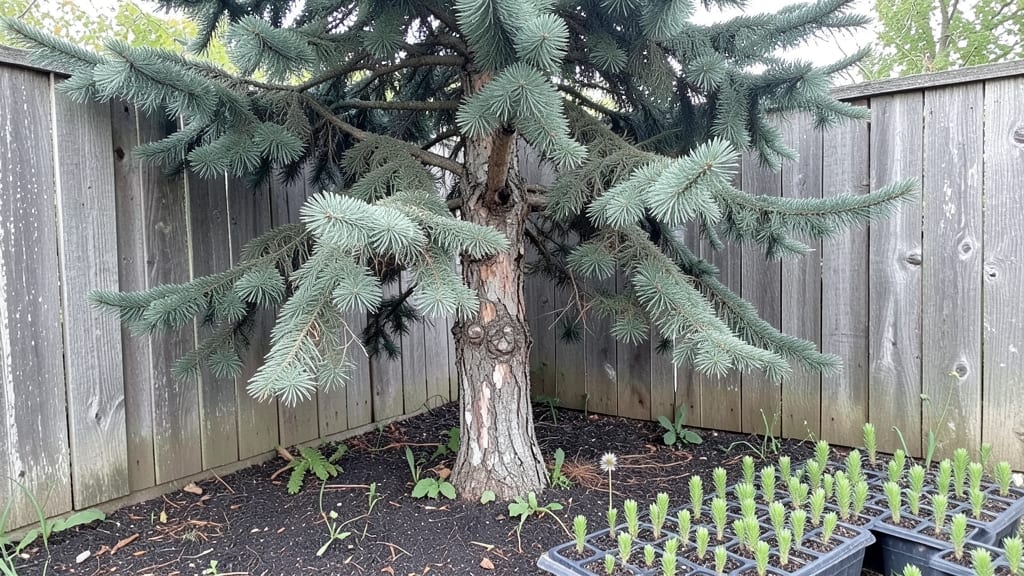
Lebanese cedar seeds take 6 to 12 months to germinate because their tough outer shells and internal dormancy mechanisms resist quick sprouting. Creating the right conditions—well-draining soil, consistent moisture, and winter chilling—helps break this natural barrier. Success depends on patience and replicating their native Mediterranean climate cues. 🌱
These seeds mimic their wild counterparts by requiring cold stratification, a process that mimics winter's natural dormancy break. Unlike fast-sprouting annuals, cedar seeds need this period to soften their shells and activate growth hormones.
I've found that pre-soaking seeds in warm water for 24 hours before planting can slightly accelerate the process, though it still won't replace the full winter chilling cycle.
The Mediterranean climate—with its hot, dry summers and cool winters—is why these seeds evolved this way, making them perfect for outdoor planting in zones 7-9.
For best results, I recommend starting seeds indoors in late winter using a mix of sand and peat moss. Keep the soil barely moist and maintain temperatures between 60-70°F during the day.
After germination (which may take months), transplant seedlings outdoors only after they've developed strong root systems and can handle cooler night temperatures. This two-phase approach gives you the best chance of success with these finicky seeds. 💫
💡 In This Article
- Understanding Lebanese Cedar Seed Germination Science
- Step-by-Step Guide to Growing Lebanese Cedar from Seeds
Understanding Lebanese cedar seed germination science
The slow germination of Lebanese cedar seeds stems from their evolutionary adaptations to survive harsh Mediterranean conditions. These seeds produce a thick, waxy outer shell containing abscisic acid, a natural growth inhibitor that prevents premature sprouting.
This chemical barrier works like a built-in timer, ensuring seeds only germinate when environmental conditions are optimal—typically after a full winter chilling period. 🌱 Unlike fast-germinating annuals, cedar seeds require this dormancy phase to soften their shells and activate growth hormones like gibberellins.
The cold stratification process is critical—seeds need 4-6 weeks at temperatures between 35-45°F to break dormancy. This mimics natural winter conditions where moisture penetrates the seed coat while cold temperatures slow metabolic activity. Without this chilling, germination rates drop dramatically, sometimes by 80%.
Compare this to pine seeds, which often germinate in 3-6 months with similar stratification needs, but cedar seeds take nearly twice as long due to their thicker seed coats.
Moisture plays a dual role: too little prevents seed coat softening, while too much can cause rot. Lebanese cedar seeds thrive in well-draining sandy-loam soil with 50-60% moisture retention. The ideal balance keeps seeds hydrated without creating anaerobic conditions.
Light exposure is less critical during germination—cedar seeds are photoblastic, meaning they don't require light to sprout, unlike many flowering plants. This adaptation helps them germinate deep in forest litter where competition for sunlight is fierce.
What most people don't realize is that these seeds also contain phenolic compounds that act as natural fungicides, protecting them from soil-borne pathogens during their long dormancy. This chemical defense is why cedar seeds often outperform other conifers in poor-quality soils.
However, this same trait makes them sensitive to high salt concentrations—a common issue in urban planting areas where soil amendments may be used. 💫
Temperature fluctuations during stratification are equally important. Research shows that alternating between 40°F night temps and 50°F day temps creates microscopic cracks in the seed coat, allowing water to penetrate more effectively. This natural process is why wild cedars often germinate in spring after winter's freeze-thaw cycles.
In controlled settings, replicating these temperature swings with a simple refrigerator stratification method (placing seeds in a moist paper towel for 6-8 weeks) can significantly improve germination rates.
The hormonal balance inside cedar seeds is another fascinating factor. While abscisic acid inhibits germination, gibberellins—produced during stratification—promote it. This push-pull dynamic explains why some seeds germinate in 6 months while others take 2 years under identical conditions.
The key variable is often the seed's internal age and how long it's been stored. Freshly harvested seeds typically germinate faster than those stored for 3+ years, as their hormonal balance degrades over time. ✨
Understanding these biological mechanisms helps explain why cedar seeds respond so dramatically to proper care. When you provide the right combination of cold, moisture, and time, you're essentially tricking the seed into thinking it's experiencing a Mediterranean winter—exactly what it evolved to expect.
This scientific approach turns what seems like a waiting game into a precise horticultural process. 🌿