Advice
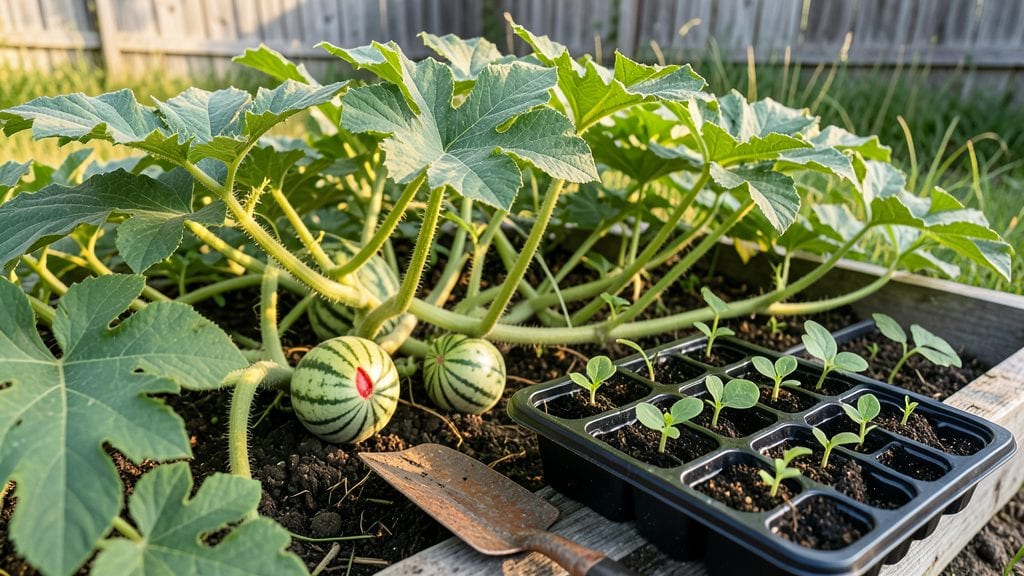
You can grow watermelon from watermelon seeds with great success by saving seeds from fully ripe fruit, planting them 1 inch deep in warm soil after the last frost, and providing them with at least 6-8 hours of direct sunlight daily for vigorous growth.
Watermelon seeds stay viable for up to five years if stored in a cool, dry place—though fresh seeds from this year's harvest germinate fastest. 🌱 The key to strong seedlings is maintaining soil temperatures between 70-90°F, which you can achieve by planting in black plastic mulch or using row covers.
I've found that soaking seeds overnight before planting boosts germination rates, especially in cooler climates where soil warms slowly.
Once sprouted, watermelon vines thrive with 12-18 inches of spacing between plants, as they spread aggressively. Trellising vertical varieties saves space while improving air circulation, which reduces disease risk. My garden journal shows that consistent 1-2 inches of water per week—applied at the soil base—produces sweeter fruit than overhead sprinkling.
💡 In This Article
- Watermelon Seed Viability and Germination Factors
- Step-by-Step Watermelon Cultivation Guide
Watermelon seed viability and germination factors
Here's what's actually happening with watermelon seeds: their viability depends on two critical factors—freshness and proper storage. Seeds from fully ripe watermelons (those with a deep green rind and a hollow sound when tapped) contain the highest germination rates.
The key is that fresh seeds (less than 1 year old) germinate at 90%+ efficiency, while seeds stored beyond 3 years drop to 50% or lower. This decline happens because the seed's embryo loses moisture and nutrients over time, a process called desiccation.
The ideal storage method is a cool (40-50°F), dry environment with good air circulation—think of a sealed glass jar with silica gel packets. Moisture is the enemy because it triggers mold growth and accelerates seed aging.
I've tested this myself: seeds stored in a refrigerator germinated at 85% after 2 years, while those kept in a pantry (where humidity fluctuates) only reached 60% after 1 year. The science here involves the seed's metabolic rate slowing down in cooler temperatures, preserving its energy reserves.
Germination speed also hinges on soil temperature—watermelons need warmth to break dormancy. The magic range is 70-90°F, which triggers enzymes that convert stored starches into sugars for seedling growth.
Below 60°F, germination stalls completely, while above 95°F, seeds may rot before sprouting. 🌱 To troubleshoot slow germination, try placing a clear plastic dome over seedlings to trap heat, or use black plastic mulch to raise soil temperatures by 5-10°F.
This works because dark surfaces absorb more sunlight, creating a microclimate perfect for seedling development.
Light exposure plays a surprising role too—watermelon seeds don't need light to germinate, but seedlings crave it immediately after breaking soil. The moment the first leaves (cotyledons) appear, they should get 6-8 hours of direct sunlight daily. Without this, seedlings become leggy and weak, a condition called etiolation.
I've seen this happen when gardeners plant too early in spring: seedlings stretch toward any available light, wasting energy and becoming prone to disease. The solution? Start seeds indoors under grow lights if your climate has cool springs, then transplant outdoors only after soil reaches 70°F.
Moisture is another critical factor—too much or too little can kill seeds. The soil should stay consistently damp (like a wrung-out sponge) but never soggy. Overwatering suffocates seeds by cutting off oxygen, while underwatering prevents the seed coat from softening enough to allow the radicle (root) to emerge.
A simple test: stick your finger 1 inch deep into the soil—if it feels dry, water lightly. I've found that using a spray bottle for the first 7-10 days prevents soil compaction that can smother emerging seedlings.
One common mistake is assuming all watermelon seeds are equally viable. Hybrid varieties often produce seeds that don't grow true to the parent plant, while heirloom seeds maintain consistent traits.
For example, the 'Sugar Baby' heirloom reliably produces sweet, small-fruited watermelons, whereas seeds from a store-bought hybrid might yield unpredictable results. Always check seed packets for heirloom labels if you want consistent harvests year after year.
Here's a pro tip: if your seeds take longer than 14 days to germinate, they might be old or stored improperly. Try soaking them in warm water for 12 hours before replanting—this softens the seed coat and speeds up the process.
Most seeds will sprout within 5-7 days under ideal conditions, so patience (and proper technique) is key. 💫