
Picking
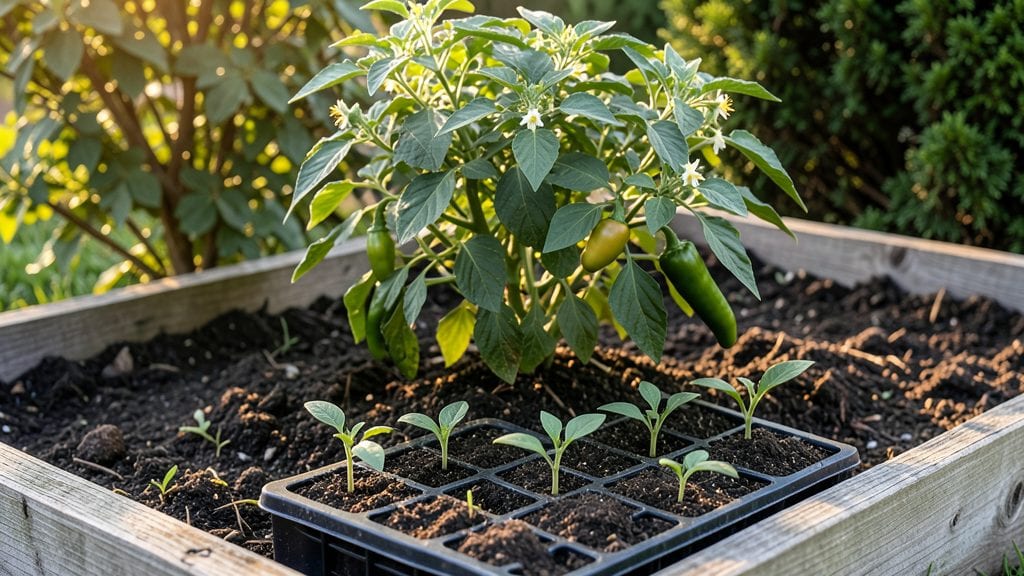
Starting jalapeño seeds indoors gives you a head start on fiery harvests that store-bought peppers can’t match. 🌱 I’ve grown mine from seed for years, and the difference in flavor and yield is night-and-day compared to nursery plants.
The secret isn’t complicated—it’s about timing, warmth, and patience. Most people rush the process, but taking just 10 minutes to prep your seeds properly means the difference between thriving seedlings and sad, leggy failures.
You’ll need a shallow tray, seed-starting mix, and a heat mat (or sunny windowsill) to keep soil between 75-85°F. Plant seeds ¼-inch deep, barely covering them, since jalapeños hate being buried too deep.
Space them 1 inch apart in the tray, and keep the soil moist but not soggy—overwatering is the #1 killer of young peppers. Germination happens in 7-14 days if conditions are right, and that’s when the real fun begins.
By the time you transplant, you’ll have stocky seedlings with 3-4 true leaves, ready to handle outdoor conditions. The first harvest comes 70-80 days after seeding, and the flavor?
Nothing compares to homegrown heat. Even if you’ve failed before, this method is foolproof—I’ve guided beginners through it, and they’ve ended up with bushels of peppers by summer.
Works for both indoor starters and direct outdoor sowing in warm climates. The key is adjusting for your zone—start indoors 8-10 weeks before last frost, or wait until soil is 60°F+ for outdoor planting. Either way, you’ll be snipping peppers by midsummer. Let’s get those seeds going!
📚 In This Guide
- What you need
- Instructions
- Tips and common mistakes
- Wrapping up and next steps
What you need
- ● Jalapeño seeds – 5–10 seeds (choose heirloom or hybrid varieties like ‘Early Jalapeño’ or ‘Big Jim’ for best results).
- ● Seed-starting trays or small pots – 2–4 inch pots (biodegradable or plastic) or a seed tray with cells (at least 12–24 cells).
- ● High-quality seed-starting mix – Lightweight, sterile potting soil (avoid garden soil—it’s too dense!). Pro tip: Mix in perlite or vermiculite (10–20%) for better drainage. 💡
- ● Grow lights or a sunny windowsill – A full-spectrum LED grow light (12–16 hours/day) or a south-facing window with direct sunlight (6+ hours/day).
- ● Spray bottle with water – For gentle hydration (avoid overwatering!).
- ● Plastic wrap or humidity dome – To retain moisture until germination (days 3–7).
- ○ Heat mat (optional but helpful) – Maintains soil temp at 75–85°F for faster germination. 🌡️
- ● Seedling heat mat – Speeds up germination by 2–3 days.
- ● Fertilizer (diluted) – A balanced, water-soluble fertilizer (5-5-5 or 10-10-10) for early growth.
- ● Plant labels – To track varieties and planting dates.
- ● Fungicide (like neem oil or hydrogen peroxide) – Prevents damping-off disease in humid conditions.
- ● Transplanting pots (3–4 inch) – For when seedlings outgrow their starter homes.
Step-by-Step instructions for seeding jalapeno peppers
Here's the foolproof method I use to get fiery, productive jalapeno plants from seed.
🌱 Step 1: Prepare Containers and Seed Starting Mix
Fill clean 2-3 inch deep containers with a sterile seed-starting mix—never garden soil, which compacts and suffocates young roots. I prefer biodegradable pots because they eliminate transplant shock when it's time to move seedlings. Moisten the mix until it holds together when squeezed but doesn't drip water.
Press the soil down lightly to create a firm surface for seeds to make contact. This prevents them from floating to the top during watering. Tap the container gently on the table to settle everything evenly. The goal is a uniform, aerated medium where seeds can germinate without resistance.
🌱 Step 2: Sow Seeds at Proper Depth
Plant 1-2 seeds per cell at a depth of about ¼ inch—roughly the diameter of the seed itself. Sowing too deep delays germination because the seedling exhausts its energy reserves before reaching light. Cover lightly with a fine mist of additional mix using your fingers, not a watering can.
I label each pot immediately with the variety and date—after a week of identical green sprouts, you'll forget which is which. Space containers 2 inches apart if using a tray to allow for even air circulation and prevent damping-off disease.
💧 Step 3: Provide Warmth and Consistent Moisture
Cover the trays with a clear humidity dome or plastic wrap to retain warmth and moisture. Jalapenos germinate fastest at 75-85°F. A seedling heat mat keeps the soil 10°F warmer than ambient and dramatically improves germination speed. Expect sprouts in 7-14 days—patience is key here.
Check daily but resist the urge to water. The dome traps enough moisture that the soil stays evenly damp without intervention. Once 50% of seeds have sprouted, remove the dome immediately—trapped humidity around new seedlings invites damping-off, which collapses stems overnight.
☀️ Step 4: Move to Bright Light Immediately
The instant seedlings break through the soil, they need 14-16 hours of light daily. A south-facing window rarely provides enough intensity, so I use a full-spectrum LED grow light positioned 2-4 inches above the plants. Raise it as they grow to maintain that gap.
Without sufficient light, seedlings stretch desperately upward (called "leggy") and never recover proper strength. You'll see leggy growth as thin, pale stems with leaves spaced far apart. Strong seedlings have thick stems, deep green color, and compact spacing between leaves.
⏰ Step 5: Thin Seedlings and Prepare for Transplant
When seedlings show their first true leaves (not the initial cotyledons), thin to the strongest plant per cell. Use scissors to snip unwanted seedlings at soil level—pulling risks disturbing roots of the remaining plant. Keep only one per cell to prevent competition for nutrients.
Two weeks before your last frost date, start hardening off the seedlings by placing them outside in a sheltered, shaded spot for 1-2 hours the first day. Gradually increase outdoor time by 1 hour daily over 10-14 days, slowly introducing more sun and wind. This prepares them for the garden without shock.
Tips & tricks for perfect jalapeno seed starting
Here's what I've learned after growing hundreds of jalapeno plants from seed—these tricks make all the difference between weak seedlings and thriving plants.
Seed Starting Mix Matters: The sterile seed-starting mix in Step 1 is non-negotiable—garden soil contains pathogens that can kill seedlings before they sprout. I've seen damping-off disease wipe out entire trays when garden soil was used instead. For even better results, add a handful of perlite to your mix to improve aeration, especially if your mix feels dense. This helps prevent that dreaded "mushy stem" syndrome that strikes when roots can't breathe.
Temperature Control: Those 75-85°F germination temps in Step 3 are critical, but here's the secret: place your seed trays on a seedling heat mat set to maintain 85°F at the soil level. Most heat mats keep soil 10°F warmer than ambient air, so if your room is 75°F, your soil will hit that perfect 85°F range. I've had seeds sprout in just 5 days when using this setup, compared to 14 days with room temperature alone.
Lighting Strategy: The 14-16 hours of light in Step 4 is essential, but placement matters just as much. Position your grow light so it's 2-4 inches above the tallest seedlings. As they grow, raise the light to maintain this gap—if you leave it fixed, you'll end up with leggy seedlings stretching toward the light. I use a timer on my grow light to automate this, ensuring consistent light cycles without me having to remember to turn it on and off daily.
Hardening Off Technique: When you begin the 1-2 hour outdoor sessions in Step 5, choose a location that gets morning sun but afternoon shade. This gradual introduction to sunlight prevents shock while still building their resilience. I've seen seedlings that were hardened off too quickly develop sunburned leaves—watch for pale or white patches that indicate they're getting too much direct sun too soon.
Pro Tips for Seeding A Jalapeno
- Here's what I've learned after growing hundreds of jalapeno plants from seed—these tricks make all the difference between weak seedlings and thriving plants.
- Seed Starting Mix Matters: The sterile seed-starting mix in Step 1 is non-negotiable—garden soil contains pathogens that can kill seedlings before they sprout.
- Temperature Control: Those 75-85°F germination temps in Step 3 are critical, but here's the secret: place your seed trays on a seedling heat mat set to maintain 85°F at the soil level.
Frequently asked questions
Got questions about seeding jalapeños? You’re not alone!
Here are answers to the most common queries—from timing to troubleshooting—so you can grow fiery peppers like a pro.
When is the best time to seed jalapeños?
Start seeds indoors 8–10 weeks before your last frost date (or 6–8 weeks if using a grow light). For warm climates, direct-sow seeds after soil temps hit 60°F+—jalapeños hate cold! Use a seed-starting kit for consistent warmth.
Can I grow jalapeños from store-bought peppers?
Technically yes, but it’s risky. Store-bought peppers are often treated with growth inhibitors or sprayed with fungicides. For reliable results, use heirloom or seed-saved jalapeños from nurseries or trusted online sellers. If you try it, soak seeds in water for 24 hours first!
Why aren’t my jalapeño seeds germinating?
Check these fixes:
- Moisture: Keep soil consistently damp (not soggy). Mist seeds daily or use a humidity dome.
- Temperature: Seeds need 70–85°F to sprout. Use a heat mat if your home is chilly.
- Depth: Plant seeds ¼ inch deep—too deep = slow germination.
- Freshness: Old seeds (<2 years) may fail. Test viability by soaking in water (floaters = dead).
How long does it take for jalapeño seedlings to mature?
From seed to harvest, expect 70–90 days in ideal conditions. Seedlings sprout in 7–14 days, then grow 1–2 inches/week with proper light (12+ hours/day). Transplant outdoors after 4–6 weeks when frost risk is gone.
What if I don’t have a greenhouse? Can I still grow jalapeños?
Use grow lights (LED or fluorescent) 12–16 hours daily until seedlings are hardened off. A sunny windowsill works for short-term starts, but supplemental light prevents leggy, weak plants. For outdoors, choose a south-facing spot with 6+ hours of sun.
What pests should I watch for with jalapeño seedlings?
Keep an eye out for:
- Aphids: Tiny green/black bugs on stems. Blast off with water or use neem oil.
- Fungal issues: Gray mold or damping-off? Improve airflow and avoid overhead watering.
- Cutworms: Protect young plants with collars (toilet paper rolls) or diatomaceous earth.
Wrapping up and next steps
Seeding a jalapeño pepper is a rewarding journey that unlocks a world of fiery flavors in just 7 days! With the right materials, patience, and a little care, you’ll soon be harvesting vibrant, spicy peppers to elevate your dishes.
Remember, consistency is key—whether it’s maintaining moisture, warmth, or light, your tiny seeds will thank you with a bountiful harvest. 🌱
Now that you’re armed with knowledge, it’s time to take action! Start your seeds today and watch them sprout into thriving plants. Once your seedlings are strong, consider transplanting them into pots or your garden—because the best part? You’ll soon be enjoying homegrown jalapeños in your favorite recipes! 🌶️🔥