Trees
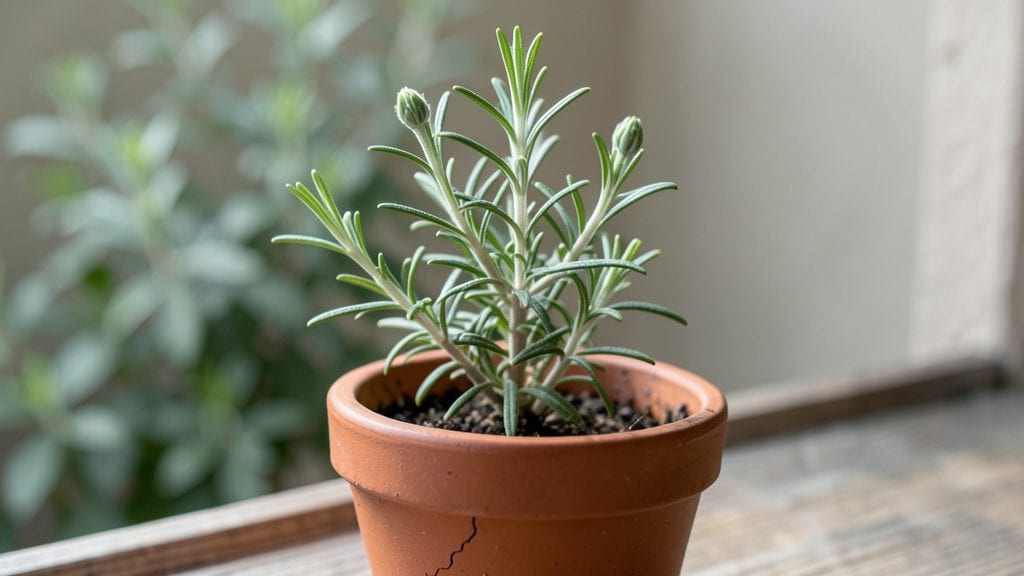
Mastering rosemary seedling identification begins with spotting those tiny, pine-like needles that seem to defy gravity. around the stem. If they’re soft or flat, it’s probably not rosemary.
Those young stems are another dead giveaway: they’re square in cross-section, not round, and covered in fine, silvery hairs that make them look like they’re dusted with frost.
Most people overlook this detail and end up confusing rosemary with thyme or oregano, but those herbs have broader leaves and smoother stems. A magnifying glass helps spot the hairs clearly.
Once you confirm the needles and stems, you’ll notice how the seedlings grow upright and bushy from the start. They rarely sprawl like mint or droop like basil.
By the time they’re 3–4 inches tall, you’ll see tiny flower buds forming at the tips—another rosemary trademark that sets it apart from look-alikes.
If you’re still unsure, pinch a few leaves and crush them between your fingers. True rosemary releases a sharp, piney scent that’s unmistakable. This trick works even on seedlings too small to identify by sight alone.
Once you’ve confirmed it’s rosemary, give it plenty of sunlight and well-draining soil to keep it thriving.
📚 In This Guide
- What you need
- Instructions
- Tips and common mistakes
- Wrapping up and next steps
What you need
- ● Rosemary seedlings or cuttings – Aim for 3–5 young plants (or more if testing multiple samples) to compare needle shapes and stems.
- ● Magnifying glass or loupe – A 10x magnification tool helps examine fine details like needle texture and stem hairiness.
- ● Ruler or measuring tape – For checking needle length (rosemary typically has 0.5–1 inch needles).
- ● Notebook and pen – To jot down observations like color, aroma, and growth patterns.
- ● Pruning shears or sharp scissors – For safely trimming stems to inspect internal structures (e.g., pith color).
- ● Grow light or sunny windowsill – A bright, indirect light source to clearly observe seedlings (natural sunlight works best!).
- ● Digital camera – Capture close-ups of needles, stems, and growth habits for later reference.
- ● Field guide or rosemary ID app – Tools like iNaturalist or PictureThis can cross-check your findings.
- ● Small tray or white plate – For arranging seedlings side-by-side during comparison.
- ○ Scent test kit (optional) – A blank scent strip or your nose! True rosemary has a distinct piney, herbal aroma.
Step-by-Step guide to identifying young rosemary seedlings
Here's how to spot true rosemary seedlings from lookalikes in just a few simple checks.
Examine Needle Shape for the Classic Rosemary Look
True rosemary seedlings have needle-like leaves that are slender and pointed at the tips. Each needle should be about ½ to 1 inch long and arranged in a circular pattern around the stem. Hold a seedling up to a bright light—you'll see the leaves are flat but slightly curved, not rolled or fuzzy. If the needles look hairy or feel rough, it's likely another herb like lavender or thyme.
Count the leaves around one stem section. Rosemary typically has 3-4 leaves per node in a tight spiral. If you see more than 5 leaves clustered together, it's probably not rosemary. The spacing between leaves should be even and compact, not stretched out or irregular.
Check Stem Texture and Growth Pattern
A rosemary seedling's stem should feel slightly woody and firm even when young. Run your fingers along it—you'll notice small bumps or nodes where leaves attach. These nodes are closer together than on other herbs. If the stem feels soft or squishy, it might be a weed or a different herb.
Look for tiny white hairs along the stem, especially near the nodes. These hairs are a dead giveaway for rosemary. They're usually sparse but visible under close inspection. If the stem is completely smooth or covered in dense fuzz, it's not rosemary. The growth pattern should be upright or slightly angled, not sprawling or creeping along the ground.
Smell the Leaves for Confirmation
This is the easiest way to confirm—crush a few leaves between your fingers and take a deep sniff. True rosemary has a strong, piney, and slightly citrusy aroma that's unmistakable. If the scent is mild, floral, or earthy, it's not rosemary. The smell should be noticeable even in young seedlings, though it may not be as intense as mature plants.
If you're unsure, compare the scent to a known rosemary plant. Keep a small sprig in your pocket or near your workspace as a reference. The aroma is your best tool for quick identification, especially when seedlings are still small and other features are hard to see.
Compare Growth Speed and Leaf Color
Rosemary seedlings grow slowly at first, with deep green leaves that darken as they mature. If a seedling is growing too fast with pale or yellowish leaves, it's likely a weed or another herb. True rosemary leaves should be bright green to dark green, never pale or spotted. Check the underside of the leaves—rosemary leaves are smooth and shiny on the bottom, not fuzzy or dull.
Watch the seedlings for a few days. Rosemary grows in compact clusters and doesn't send out long runners. If you see sprawling vines or long, thin stems, it's not rosemary. The leaves should stay attached firmly to the stem—if they wilt or drop easily, the plant isn't healthy rosemary.
Rule Out Common Lookalikes
Lavender seedlings often mimic rosemary but have softer, broader leaves and a more grayish-green color. Thyme seedlings are smaller, with tiny, rounded leaves that grow in pairs. Sage seedlings have oval-shaped leaves with serrated edges, while rosemary leaves are smooth and pointed. Keep a simple chart nearby to compare features if you're still unsure.
If you're growing seedlings indoors, pay attention to how they respond to light. Rosemary seedlings will lean toward the light source but stay upright. If they flop over or grow in odd directions, it's likely a different plant. True rosemary seedlings are sturdy and resilient, even when young.
Tips & tricks for perfect rosemary seedling identification
Identifying rosemary seedlings correctly can be tricky, but these practical tips will help you distinguish true rosemary from common lookalikes with confidence.
Leaf Arrangement Insight: When examining the leaves in Step 1, focus on the spacing between them. True rosemary leaves grow in a tight spiral with about 3-4 leaves per node. If you notice more than 5 leaves clustered together, it's likely not rosemary. The even spacing is a key characteristic that sets it apart from herbs like thyme, which often have leaves growing in pairs or whorls.
Stem Texture Clues: In Step 2, pay close attention to the stem's texture. True rosemary stems should feel slightly woody and firm, even in young seedlings. If the stem feels soft or squishy, it's probably not rosemary. The tiny white hairs along the stem near the nodes are another telltale sign—these hairs are subtle but distinctive when you look closely.
Lighting Matters: For the best visual inspection in Steps 1 and 4, use natural sunlight or a bright lamp. The light will help you see the subtle differences in leaf shape and color more clearly. Hold the seedlings up to the light to check for the flat, slightly curved needles that are characteristic of rosemary.
Scent Comparison: When using scent as confirmation in Step 3, crush a few leaves and compare the aroma to a known rosemary plant. The piney, citrusy scent is unmistakable once you know what to look for. If the scent is mild or floral, it's likely not rosemary. Keep a small sprig of rosemary in your pocket as a reference for future comparisons.
Pro Tips for Rosemary Seedling Identification
- Identifying rosemary seedlings correctly can be tricky, but these practical tips will help you distinguish true rosemary from common lookalikes with confidence.
- Leaf Arrangement Insight: When examining the leaves in Step 1, focus on the spacing between them.
- Stem Texture Clues: In Step 2, pay close attention to the stem's texture.
Frequently asked questions
Got questions about spotting young rosemary seedlings? Here are the answers to the most common ones—so you can confidently ID those tiny green sprouts before they grow!
How do I tell a rosemary seedling apart from other herbs or weeds?
Look for needle-like leaves (1–2 inches long, gray-green, and slightly fuzzy) and a woody square stem. Weeds like mint or oregano have round stems and broader leaves, while young lavender has tiny, fuzzy leaves but a more upright growth habit.
When is the best time to identify rosemary seedlings?
The ideal time is spring or early summer, when new growth is active. Seedlings sprout slowly (4–8 weeks), so check regularly if you planted seeds. If you’re transplanting cuttings, wait until they’ve rooted (about 2–3 weeks) before confirming ID.
Can I use rosemary cuttings instead of seedlings?
Rosemary propagates easily from hardwood cuttings (taken in late fall/winter) or softwood cuttings (spring/summer). Just snip a 3–4 inch stem, strip lower leaves, dip in rooting hormone, and plant in moist soil. Seedlings take longer to mature, so cuttings are often faster!
What if my “rosemary” seedlings look wrong?
Check for yellowing leaves (overwatering), pale stems (underwatering), or mushy roots (root rot). If leaves are too broad or smooth, it might be a weed like pennyroyal. Pull and compost suspicious plants—rosemary seedlings should never have serrated edges!
Do rosemary seedlings need special care?
Keep soil well-draining (mix with perlite/sand) and water only when topsoil is dry. Young plants thrive in full sun (6+ hours/day) and moderate temps (60–75°F). Avoid fertilizing until established—too much nitrogen = leggy, weak growth.
Wrapping up and next steps
Identifying rosemary seedlings early ensures healthy growth and a thriving herb garden! 🌱 By focusing on needle-like leaves, square stems, and aromatic scent, you can confidently distinguish them from lookalikes. Remember, patience and close observation are key—your green thumb will guide you!
Now that you’re equipped with these clues, take the next step: grab those seedlings and nurture them with love (and maybe a little sunshine!). Happy gardening—your kitchen (and taste buds) will thank you! 🌿