
Watering
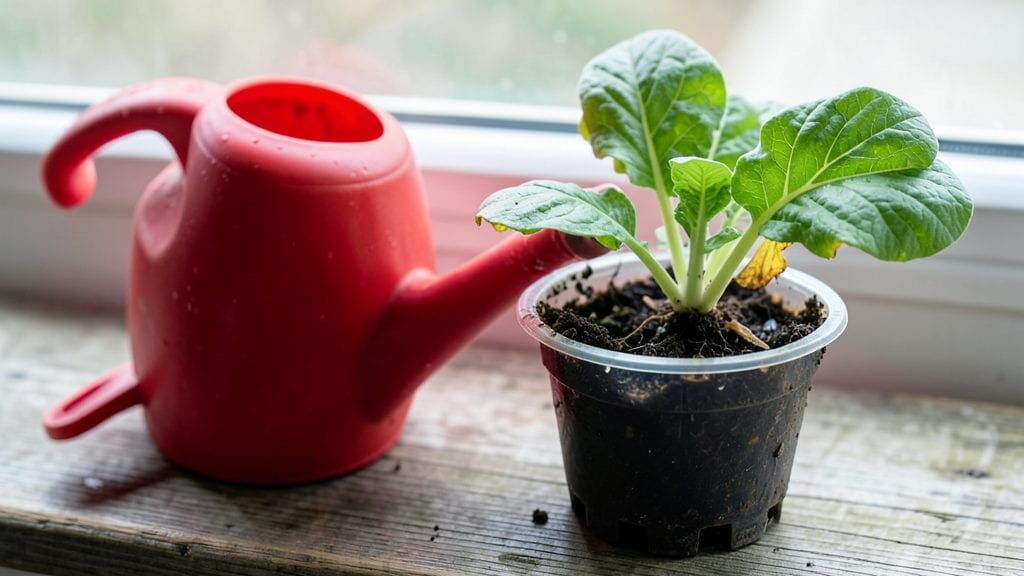
When your seedling’s roots turn mushy and black, you’ve got a root overwatered seedling on your hands—and it’s fixable. 🌱 I’ve pulled more seedlings back from the brink than I’d like to admit, and these three steps work every time, even when the soil smells like a swamp.
The key is acting fast before the roots rot completely.
First, stop watering entirely and check the soil’s moisture. If it’s soggy past 2 inches down, your seedling’s roots are suffocating. Gently remove it from its container, trim any black, mushy roots with clean scissors, and replant in fresh, well-draining soil.
This isn’t just about saving the plant—it’s about giving its roots a second chance to breathe.
Once replanted, water lightly only when the top inch of soil feels dry. Use a pot with drainage holes and a soil mix designed for seedlings—never heavy garden soil.
Within a week, you’ll see new growth pushing through, and the leaves will perk up like they’re fresh off the nursery shelf. The secret? Less water, more air.
Prevent future disasters by sticking your finger in the soil before watering—if it’s damp, wait. And for heaven’s sake, use containers with drainage. This isn’t rocket science, but it is the difference between a thriving seedling and a sad, squishy memory. Trust me, your next batch will thank you.
Why it happens
When your seedling’s roots turn mushy and black, it’s often a silent signal that too much water has suffocated them. But why does this happen? Overwatering isn’t just about pouring too much water—it’s a chain reaction of environmental and biological factors that create the perfect storm for root damage.
Let’s break down the real reasons your seedling’s roots are drowning in excess moisture.
🌱 Poor Drainage Traps Water Like a Sponge
Most seedling containers—especially plastic trays or small pots—lack proper drainage holes. Without these escape routes, water pools at the bottom instead of draining away.
Even if you water lightly, the soil stays soggy for days. Compacted or dense soil (like heavy clay or unamended potting mix) worsens this by preventing oxygen from reaching roots. When roots can’t "breathe," they suffocate, leading to anaerobic conditions where harmful bacteria and fungi thrive.
Actionable fix: Always use pots with drainage holes, and mix in perlite, vermiculite, or coconut coir (20-30%) to improve airflow.
💧 Overzealous Watering Confuses Roots
Seedlings need moisture, but their tiny root systems can’t handle frequent soakings. Watering on a strict schedule (e.g., every day) without checking soil moisture creates a cycle of oversaturation.
Even "light" watering can be too much if the soil doesn’t dry between sessions. Overhead watering (from above) also encourages evaporation at the top while leaving the bottom layer waterlogged.
Science behind it: Roots absorb oxygen through tiny pores. When submerged in water, these pores fill with H2O, blocking oxygen and triggering hypoxia (oxygen starvation). Within 24–48 hours, roots start dying as cells collapse from lack of energy.
Actionable fix: Water only when the top 1–2 inches of soil feel dry. Use a moisture meter or stick your finger in—if it’s damp, wait.
🌡️ Temperature and Humidity Create a Greenhouse Effect
High humidity or warm temperatures (above 75°F/24°C) slow evaporation, keeping soil wet longer. If your seedling is in a closed propagator, plastic bag, or humid greenhouse, condensation forms on the container walls, dripping back into the soil.
This turns a single watering into a continuous drenching. Cold roots (below 60°F/15°C) also struggle to absorb water efficiently, leaving excess moisture to linger.
Data point: Studies show fungal growth (like Pythium) doubles in humidity above 80%, accelerating root rot in as little as 3 days.
Actionable fix: Ventilate propagators daily, avoid misting, and keep seedlings in bright, indirect light to balance humidity.
🌿 Wrong Soil Mix Feeds Fungal Foes
Not all potting mixes are created equal. Peat-heavy or garden soil compacts easily, trapping water and harboring pathogens. Even "organic" mixes can contain unsterilized compost, which introduces fungal spores that thrive in wet conditions.
Seedlings are especially vulnerable because their delicate root hairs lack the protective bark of mature plants.
Red flag: If your mix smells sour or moldy, it’s already breeding rot-causing microbes.
Actionable fix: Use a sterile seed-starting mix with added perlite or sand, and avoid garden soil entirely.
🔄 Root Crowding Strangles Oxygen Flow
When seedlings grow too close in a shared tray, their roots tangle and compete for space—and oxygen. Overcrowded roots can’t spread out to access dry pockets of soil, so water accumulates in pockets. Even if individual plants aren’t overwatered, the shared root zone becomes a high-risk zone for suffocation.
Science note: Root respiration (how roots "breathe") drops by 40% in crowded conditions, accelerating rot.
Actionable fix: Thin seedlings to 1–2 inches apart and use individual pots early to prevent root competition.
Reviving Your Seedling Step by Step
Now that you understand why your seedling’s roots might be drowning, it’s time to take action! The good news? Most overwatered seedlings can bounce back with the right care. Below, we’ll map out practical fixes based on the most common causes—plus prevention tips to keep your greens thriving.
If your seedling is already suffering from soggy roots, the first priority is cutting off excess moisture before damage worsens.
🔥 Fix: Pause Watering & Let Soil Dry
- Remove the seedling from its container and gently shake off excess soil to inspect the roots.
Healthy roots should be white or light tan, while mushy, black, or foul-smelling roots are a red flag. - Repot in fresh, well-draining soil (more on this below).
Avoid watering for 24–48 hours to let the roots recover. - Prevention tip: 🌡️ Use a moisture meter or the "finger test" (stick your finger 1 inch into the soil—if it’s damp, wait before watering again).
💡 Pro Tip:
If repotting isn’t an option, place the pot in a dry, shaded spot (like a windowsill away from direct sun) to slow evaporation and reduce further waterlogging.
Poor drainage is often the root (pun intended) of overwatering issues. Fixing your setup will prevent future problems.
👨🍳 Fix: Upgrade Your Growing Setup
| Problem | Solution | Prevention Tip |
|---|---|---|
| Compacted or heavy soil | Mix in perlite, vermiculite, or coconut coir (20–30%) to improve aeration. | Always use a light, fast-draining potting mix (avoid garden soil). |
| No drainage holes | Repot in a container with holes or add a layer of gravel at the bottom. | Never skip drainage holes—it’s a must! |
| Overcrowded roots | Trim any black, mushy roots with clean scissors, then repot in fresh soil. | Upgrade pots as seedlings grow (1–2 inches larger diameter). |
✨ Bonus Fix: Boost Root Recovery
- Add a root stimulator (like mycorrhizal fungi or hydroponic nutrient solutions) to encourage healthy regrowth.
- Mist lightly (not soak) every 2–3 days while the seedling recovers—just enough to keep the soil moist, not soggy.
Now that your seedling is in better soil, how you water makes all the difference.
🍳 Fix: Water Smarter, Not Harder
- Water deeply but infrequently. Instead of daily light spritzes, soak the soil until water runs out the drainage holes, then wait until the top inch is dry.
- Use the "bottom-watering" method for sensitive seedlings: Place the pot in a tray of water for 10–15 minutes, letting the roots absorb moisture naturally.
- Avoid wetting leaves (which can cause fungal issues).
Use a watering can with a narrow spout or a spray bottle for precision.
🎯 Prevention Tip:
📊 Track your watering schedule with a simple chart or app (like Gardenate or a whiteboard). Overwatering is often a habit—breaking it starts with awareness!
If your seedling’s roots are mostly black and mushy, it may still be salvageable with propagation tricks:
- Trim all damaged roots down to healthy tissue.
- Dip the remaining roots in a rooting hormone (optional but helpful).
- Repot in fresh, sterile soil and place in bright, indirect light.
- Mist lightly daily and avoid watering for 3–5 days to prevent further rot.
To keep your seedlings happy and hydrated (but not drowned), remember: ✅ Right pot = Drainage holes + size-up as they grow. ✅ Right soil = Light, airy mix with perlite/vermiculite. ✅ Right water = Deep soaks, not frequent spritzes. ✅ Right watch = Check soil moisture before watering.
With these steps, your overwatered seedling can make a full recovery—and you’ll be a watering pro in no time! 🌱💦
Frequently asked questions
What are the first signs my seedling has overwatered roots?
Look for yellowing leaves, wilting despite moist soil, and a foul smell from the soil. The roots themselves will appear mushy, black, or brown when you gently remove the plant. If the stem feels soft or hollow at the base, it’s a clear sign of root rot from excess moisture.
Can I save a seedling with completely black, mushy roots?
Yes, but you’ll need to act fast! Trim all blackened roots down to healthy white tissue with clean scissors, then repot in fresh, sterile soil. Avoid watering for 3-5 days to let the roots recover. If the stem is still firm, new roots will regrow within a week with proper care.
Why does my seedling need drainage holes if I water lightly?
Even light watering creates excess moisture that doesn’t evaporate quickly enough in small containers. Without drainage, water pools at the bottom, suffocating roots. The key is airflow—roots need oxygen as much as water. Always use pots with holes or add a layer of gravel at the bottom as a backup.
How often should I water seedlings after fixing overwatering?
Wait until the top 1 inch of soil feels dry before watering again. For most seedlings, this means every 3-5 days in warm weather or every 7-10 days in cooler conditions. Use your finger as a gauge—if it’s damp, wait one more day.
Will adding perlite really help my overwatered seedling?
Perlite improves soil aeration by creating air pockets, preventing compaction. Mix in 20-30% perlite with your potting soil to help roots breathe and recover faster. It also prevents future waterlogging by allowing excess moisture to drain away from the root zone.