
Pests and Diseases
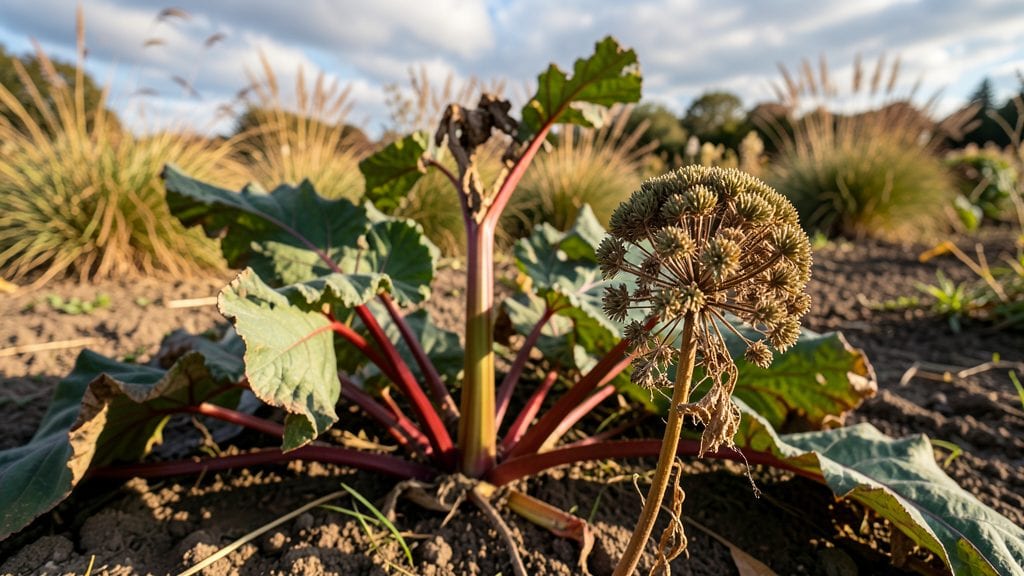
When rhubarb goes to seed, your plant is sending up those stubborn flower stalks—its way of saying it’s time for a change, whether you’re ready or not. 🌱 I’ve watched rhubarb crowns bolt after just three years, turning your... harvest into a bitter memory.
The good news? You can still save your plant with the right moves.
Most gardeners assume older rhubarb is just done, but age isn’t the real villain—it’s the plant’s natural cycle. Three-year-old crowns often bolt because they’ve put too much energy into leaves and stems instead of storage roots.
The fix starts with harvesting younger stalks first and avoiding any stress, like drought or overcrowding, that pushes the plant into seed mode.
By cutting back those flower stalks at the base and focusing on younger, more tender stalks, you can extend your rhubarb’s productive life for years. Even better, forcing the plant to focus on leaf growth—rather than seeds—means you’ll get bigger, sweeter harvests next season.
It’s not magic; it’s just paying attention to what your rhubarb really needs.
This works for both in-ground plants and container-grown rhubarb, though containers need extra care to avoid drying out. The key is consistency: watch for those first flower stalks in late spring, and act fast. Your rhubarb’s second act starts now.
The Hidden Triggers Behind Seed Formation
When your rhubarb plant starts producing seed stalks instead of the tender stalks you love, it’s usually a sign that the plant is shifting its energy toward reproduction. But why does this happen?
Understanding the root causes—literally and figuratively—can help you prevent it and keep your rhubarb thriving. Here’s a breakdown of the most common culprits, explained in simple terms.
Rhubarb is a perennial plant, meaning it lives for multiple years, and like many perennials, it eventually reaches a stage where it prioritizes reproduction over growth.
After 3 to 5 years, older rhubarb plants may start sending up seed stalks (also called flower stalks) as a natural part of their lifecycle. This is the plant’s way of ensuring survival by producing seeds for the next generation.
💡 Pro Tip: If your rhubarb is past its prime, consider dividing the plant every 3–4 years to rejuvenate it. This interrupts the aging process and can delay—or even prevent—seed stalk formation.
Rhubarb thrives in full sun to partial shade, but when it gets too much sunlight—especially in hot climates—it can trigger early flowering. Excessive heat and long daylight hours (like 14+ hours in summer) send signals to the plant that it’s time to reproduce.
Similarly, cold snaps followed by sudden warmth can also prompt seed stalk growth as the plant responds to changing seasons.
🌡️ Actionable Fix:
- Provide afternoon shade in hot climates (use shade cloth or dappled shade from trees).
- Avoid planting rhubarb in areas with extreme temperature swings.
- If you’re in a short-day climate (like Zone 3–5), rhubarb may naturally delay flowering longer.
Rhubarb is surprisingly drought-tolerant, but when it experiences drought stress or nutrient deficiencies, it may shift energy toward seed production as a survival mechanism. Conversely, over-fertilizing with high-nitrogen feeds (like fresh manure or synthetic nitrogen-heavy fertilizers) can also trigger early flowering by promoting rapid growth—only for the plant to "realize" it needs to reproduce.
📊 Nutrient Balance Check:
Issue
Symptoms
Solution
Drought Stress
Wilting leaves, crispy edges, stunted growth
Water deeply 1–2 times per week (1–2 inches per week). Mulch to retain moisture.
Nitrogen Deficiency
Yellowing leaves (chlorosis), weak stalks
Apply a balanced fertilizer (e.g., 10-10-10) in early spring. Avoid fresh manure.
Phosphorus/Potassium Imbalance
Purple-tinged leaves, weak roots
Test soil and amend with bone meal or wood ash for phosphorus.
Rhubarb is a long-day plant, meaning it naturally flowers in response to increasing daylight hours (typically after 14+ hours of light). In regions with short summers (like the Pacific Northwest or northern U.S.), rhubarb may delay flowering longer. However, in tropical or southern climates, where daylight remains long year-round, rhubarb plants may flower earlier and more aggressively.
✨ Garden Hack: If you’re in a long-day climate and want to delay flowering, try shading the plant for 6–8 weeks in late winter/early spring to mimic shorter days. Use a light-blocking fabric (like shade cloth) to reduce daylight exposure.
Rhubarb plants spread via corms and rhizomes, and when they’re overcrowded, they compete for resources. In response, the plant may produce seed stalks as a way to reallocate energy away from vegetative growth (stalks and leaves) toward reproduction.
This is especially common in older, undivided clumps where roots are tangled and nutrients are limited.
🔪 Solution:
- Divide rhubarb every 3–4 years in early spring to reduce crowding.
- Remove offsets (baby plants) that form around the main crown to prevent overgrowth.
- Ensure 12–18 inches of space between plants for optimal air circulation and root expansion.
By addressing these triggers, you can significantly reduce—or even eliminate—seed stalk formation in your rhubarb. The key is balancing age, light, water, nutrients, and space to keep your plant focused on producing the stalks you love! 🥬
Reviving and Preventing Seed Production
When your rhubarb starts going to seed, it’s often a sign that the plant is redirecting its energy toward reproduction instead of producing the tender stalks you love. The good news? You can take action to revive your plant and prevent this from happening again.
Below are practical solutions tailored to common causes, along with prevention tips to keep your rhubarb thriving for years to come.
If your rhubarb is over five years old, it may naturally shift focus toward seed production as a survival strategy. While this is a normal part of its lifecycle, you can encourage it to "reset" and prioritize stalk growth again.
How to Fix It:
- 🔪 Prune Aggressively: Cut back all stalks to the ground in early spring (before new growth emerges).
This forces the plant to redirect its energy toward producing fresh, tender stalks rather than seeds. - 🌱 Divide the Crown: Dig up the rhubarb crown and separate it into smaller sections, ensuring each has at least one healthy bud.
Replant the divisions in fresh soil to stimulate new growth. - 💡 Fertilize Lightly: After pruning or dividing, apply a balanced, low-nitrogen fertilizer (like 5-10-10) to support recovery without encouraging excessive leafy growth.
Prevention Tips:
- 📅 Rotate Harvesting: Avoid harvesting more than one-third of the stalks in a season. Over-harvesting stresses the plant and can accelerate its shift toward seed production.
- 🌿 Replace Every 5-6 Years: Rhubarb plants naturally decline in productivity after this time.
Plan to divide or replace older plants to maintain vigor.
If pests (like aphids, crown borers, or slugs) or diseases (such as fungal infections) are weakening your rhubarb, the plant may produce seeds as a last-ditch effort to propagate. Addressing the root cause will help revive it.
How to Fix It:
- 👨🍳 Treat Pests Immediately:
- Aphids: Spray with soapy water (1 tsp mild soap per quart of water) or introduce ladybugs.
- Slugs/Snails: Use beer traps or diatomaceous earth around the base.
- Crown Borers: Remove affected stalks and treat the crown with neem oil or insecticidal soap.
- 🌡️ Improve Air Circulation: Space plants 2-3 feet apart to reduce humidity and fungal risks (like leaf spot).
Prune any crowded or diseased leaves. - 💊 Apply Fungicide: If fungal diseases (like rust or powdery mildew) are present, use a copper-based fungicide or baking soda spray (1 tbsp baking soda + 1 quart water + a drop of soap).
Prevention Tips:
- ✨ Mulch Properly: Use straw or wood chips to keep soil moist and deter pests while improving soil health.
- 🌱 Choose Resistant Varieties: Opt for disease-resistant rhubarb types like ‘Victoria’ or ‘Canadian Red’ if your area has recurring issues.
Stress from improper light, soil, or water can trigger seed production. Rhubarb thrives in specific conditions—adjusting these will help it bounce back.
How to Fix It:
- 🌿 Ensure Full Sun: Rhubarb needs at least 6 hours of sunlight daily. If shaded, transplant to a sunnier spot or thin nearby plants.
- 💧 Adjust Watering: Keep soil consistently moist but not waterlogged.
Drought stress can force the plant to go to seed. Water deeply 1-2 times per week. - 🌱 Amend Soil: Rhubarb prefers well-draining, slightly acidic soil (pH 6.0-6.8). Mix in compost or aged manure to improve fertility and structure.
Prevention Tips:
- 🎯 Monitor Soil Moisture: Use a moisture meter or check soil 2 inches deep—it should feel like a damp sponge.
- 🔥 Avoid Over-Fertilizing: Too much nitrogen (especially late in the season) can promote leafy growth at the expense of stalks.
Stick to balanced fertilizers in early spring.
Harvesting rhubarb too late in the season (especially after June) can signal the plant that winter is near, prompting it to focus on seed production. Timing matters!
How to Fix It:
- ⏰ Stop Harvesting by Mid-June: This gives the plant enough time to store energy for next year’s growth. Avoid cutting stalks after this point.
- 🍃 Let Leaves Stay: Unlike stalks, leaves are essential for photosynthesis. Never remove them unless diseased.
Prevention Tips:
- 📅 Mark Your Calendar: Use a garden marker to note when to halt harvesting.
- 🌿 Mulch Heavily in Fall: Add a 2-3 inch layer of mulch after the first frost to protect the crown and encourage strong regrowth.
For stubborn cases, combine pruning + pest control + soil amendments for a full revival. For example:
- Prune all seed stalks and weak growth in early spring.
- Test soil and adjust pH/fertility if needed.
- Monitor for pests weekly and treat early.
With these steps, your rhubarb should shift its focus back to producing the sweet, tangy stalks you crave—without the unwanted seeds!
Frequently asked questions
Why does my rhubarb suddenly start producing seed stalks?
Rhubarb goes to seed as a natural survival strategy, especially after 3-5 years of growth. Long daylight hours, extreme temperature swings, or stress from drought/overcrowding can also trigger this shift. The plant prioritizes reproduction when it senses it's time to pass on its genes.
Can I still eat rhubarb stalks after it goes to seed?
Yes, but the stalks may become tougher and more fibrous once seed formation begins. Focus on harvesting the youngest, most tender stalks first. After removing flower stalks, new growth will often produce better-quality stalks. The leaves remain toxic regardless of seed production.
How do I prevent rhubarb from flowering next year?
Start by cutting back all flower stalks at the base immediately. Divide mature plants every 3-4 years to rejuvenate them. Provide afternoon shade in hot climates, maintain consistent moisture, and avoid harvesting after mid-June to prevent stress signals.
Will removing flower stalks harm my rhubarb plant?
No, removing seed stalks actually benefits the plant by redirecting its energy toward stalk production. Just be sure to cut them at the base with clean shears. The plant may produce new stalks within weeks. This method works for both in-ground and container-grown rhubarb.
Can I save seed from my rhubarb plant?
While possible, rhubarb seeds rarely produce true-to-type plants. The resulting seedlings may have different characteristics. If you want to propagate, divide the crown instead. Seed collection is more practical for heirloom varieties where you want genetic variation.