
Lawn
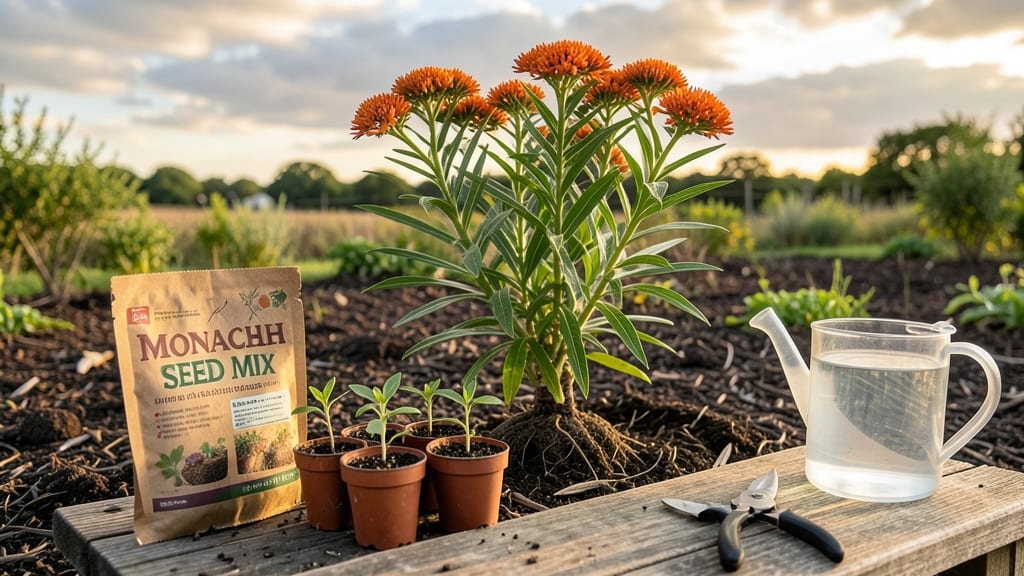
A monarch seed mix can transform your yard into a butterfly haven—just scatter the seeds and watch orange wings return. I planted mine last spring, and by July, the milkweed and coneflowers were covered in caterpillars and fluttering adults.
The secret isn’t fancy techniques; it’s choosing the right plants and giving them space to thrive.
You’ll need a sunny spot with well-draining soil—most monarch favorites like 6+ hours of sunlight daily and average garden soil. Plant in early spring or late summer for the best results, and keep the area weed-free until the seeds sprout.
The mix typically includes milkweed (non-negotiable for monarchs) plus pollinator magnets like bee balm and goldenrod.
Within 6-8 weeks, you’ll see tender milkweed shoots pushing through the soil, followed by vibrant blooms that attract butterflies from miles around. The real magic happens when you see caterpillars munching on the leaves—proof your garden is working.
Just avoid overwatering, and you’ll have a thriving pollinator oasis by next summer.
Works in gardens, meadows, or even large containers—just ensure the plants have room to grow. Pair with native grasses for extra habitat value, and watch your yard become a stopover for migrating monarchs. Here’s how to get started without the guesswork.
📚 In This Guide
- What you need
- Instructions
- Tips and common mistakes
- Wrapping up and next steps
What you need
- ● Monarch-friendly seeds (50-100% of mix): Milkweed seeds (e.g., Asclepias tuberosa or Asclepias syriaca) – 20-30% of total mix (essential for monarch caterpillars!)
- ● Nectar-rich flowers (e.g., Liatris spicata, Echinacea purpurea, or Rudbeckia hirta) – 50-70% of total mix
- ○ Native wildflower seeds (optional but recommended): Coreopsis, Salvia, or Goldenrod – 10-20% of total mix
- ● Seed mix container: A clean, airtight bag or jar (quart-sized or larger)
- ● Measuring cups/spoons: For precise seed ratios
- ● Funnel or small scoop: To avoid spills when mixing
- ○ Gloves (optional): For handling seeds or soil (if prepping planting areas)
- ● Label & marker: To tag your seed mix with the blend name and date
- ● Sunny planting spot: At least 6 hours of sunlight daily (check seed packet specifics)
- ● Well-draining soil: Amend with compost if needed (monarchs love fertile ground!)
Instructions for planting a monarch-friendly seed mix
Here’s how to transform your garden into a monarch magnet with minimal effort.
Prepare the Soil for Optimal Germination
Start by clearing the planting area of weeds and debris—monarch-friendly blooms need clean competition-free soil to establish quickly. Loosen the top 6 inches of soil with a garden fork or tiller, breaking up any compacted layers. Monarch seed mixes often include fine seeds like milkweed and coneflower, so you’ll want a smooth, seedbed-like texture to prevent them from sinking too deep.
Work in a 1-inch layer of compost (if using) or the 1 pound of organic fertilizer you’ve set aside—this ensures your plants have the phosphorus and potassium they’ll need for strong root development. Monarchs rely on healthy milkweed, so don’t skimp on soil prep. After amending, rake the surface lightly to create a fine, even layer where tiny seeds can make contact with the soil.
Scatter Seeds Evenly for Balanced Blooms
Spread the monarch seed mix evenly across the prepared area, aiming for about 1/4 pound per 100 square feet. I like to use a seed spreader for larger areas—it ensures consistent coverage without clumping. For smaller patches, scatter seeds by hand, gently tossing them rather than dropping them directly onto the soil to avoid deep burial.
Lightly press the seeds into the soil with your hand or a rake, just enough to ensure good soil contact. Monarch seed mixes often contain a variety of species, so expect some seeds to be larger (like milkweed) and others nearly invisible (like butterfly weed). Water gently but thoroughly right after planting—this helps settle the seeds into place and kickstarts germination. Keep the soil moist but not soggy for the first 2-3 weeks until seedlings emerge.
Maintain Moisture and Monitor for Monarch Visitors
Water the newly planted area once daily for the first 2 weeks, keeping the top 1-2 inches of soil consistently moist. Monarch caterpillars will only lay eggs on healthy milkweed, so proper hydration is critical. Once seedlings reach 2-3 inches tall, reduce watering to 2-3 times per week, allowing the soil to dry slightly between sessions to prevent fungal issues.
Watch for the first signs of growth—monarch seed mixes often sprout within 7-14 days, with milkweed appearing first. As plants mature, you’ll notice butterflies investigating the foliage. Leave some leaves intentionally untouched; these are prime egg-laying spots for monarchs. Thin seedlings to 6-12 inches apart once they’re established to give each plant room to thrive and support caterpillars.
Encourage Continuous Blooms for Pollinators
Deadhead spent blooms regularly to prolong flowering and attract monarchs throughout the season. Cut back 1/3 of the plant’s height after the first flush of blooms to encourage a second round of growth. Monarchs are drawn to nectar-rich flowers, so focus on maintaining at least 3-4 milkweed plants per patch—this creates a reliable food source for migrating butterflies.
By late summer, you’ll start seeing monarch caterpillars munching on milkweed leaves. Leave them be! These caterpillars are the future of your garden’s pollinator population. If you notice any signs of pests (like aphids), treat with neem oil spray—it’s safe for monarchs and other beneficial insects. With consistent care, your monarch seed mix will become a year-round haven for these iconic pollinators.
Tips & tricks for planting a monarch-friendly seed mix
Creating a thriving monarch habitat doesn't require complicated techniques—just a few strategic approaches to maximize success with minimal effort.
Soil Preparation Strategy: In Step 1, when loosening the top 6 inches of soil, focus on breaking up any hardpan layers without disturbing deeper soil. Monarch seed mixes often contain delicate species like coneflower that prefer loose, aerated soil. If your garden has heavy clay, work in an extra 1/2-inch layer of coarse sand mixed with your compost to improve drainage while maintaining moisture retention. This prevents seedling stress during the critical first 2-3 weeks when roots are establishing.
Seed Distribution Technique: For Step 2, when scattering your 1/4 pound of seed mix per 100 square feet, consider creating small islands of concentrated planting. Focus on planting in clusters of 3-4 square feet rather than uniformly across large areas. This creates visual landmarks for monarchs during migration and provides denser food sources. After scattering, use a stiff board to gently press seeds into the soil—this ensures consistent contact without burying them too deeply, which is particularly important for the fine seeds like butterfly weed.
Watering Precision: The once-daily watering in Step 3 requires careful monitoring during the first two weeks. Use a rain gauge or tuna can to measure exactly 1 inch of water per week—this keeps the top 1-2 inches of soil consistently moist without oversaturating. Early morning watering prevents fungal issues while maintaining optimal humidity for germination. Once seedlings reach 2-3 inches, switch to deeper watering (1-2 inches per week) to encourage strong root development rather than surface moisture.
Pest Management Insight: When dealing with aphids in Step 4, neem oil spray should be applied in the early evening when monarchs are less active. Mix 1 tablespoon of neem oil with 1 quart of water and a few drops of mild soap as an emulsifier. Spray until leaves are thoroughly wet, focusing on the undersides where aphids congregate. This treatment remains safe for monarchs while effectively controlling pests without harming beneficial insects.
Pro Tips for Monarch Seed Mix
- Creating a thriving monarch habitat doesn't require complicated techniques—just a few strategic approaches to maximize success with minimal effort.
- Soil Preparation Strategy: In Step 1, when loosening the top 6 inches of soil, focus on breaking up any hardpan layers without disturbing deeper soil.
- Seed Distribution Technique: For Step 2, when scattering your 1/4 pound of seed mix per 100 square feet, consider creating small islands of concentrated planting.
Frequently asked questions
Got questions about growing monarch seed mixes?
You’re not alone! Here are answers to the most common queries to help you create a thriving pollinator haven with ease.
When is the best time to plant monarch seed mix?
The ideal planting window is early spring (March–May) or late summer (August–September)—just before the first frost. Monarchs rely on milkweed (included in most mixes) for their larvae, so timing ensures fresh foliage for caterpillars. For fall planting, choose cold-hardy varieties and mulch lightly to protect seeds from winter chill.
How long does it take for monarch seed mix to bloom?
Most varieties sprout in 7–14 days, but full blooms typically appear in 6–12 weeks, depending on sunlight and soil. Fast-growing species like Asclepias incarnata (swamp milkweed) may flower sooner, while perennials like Asclepias tuberosa (butterfly weed) take longer but return yearly. Patience pays off—monarchs will thank you!
Can I grow monarch seed mix in containers or small spaces?
Use 5–10 gallon pots with well-draining soil and place them in sunny spots (6+ hours of light). Dwarf milkweed varieties (e.g., Asclepias curassavica) thrive in containers. Just ensure pots are at least 12 inches deep for root growth. Balconies, patios, and raised beds work great—monarchs don’t care about the view, just the nectar!
What if my monarch seed mix attracts pests like aphids or deer?
Milkweed is a magnet for some pests, but don’t stress! Neem oil or insecticidal soap tackles aphids, while deer-resistant mixes (like Asclepias syriaca) deter browsers. Fencing (3–4 feet tall) or companion planting with lavender or marigolds can also help. Remember, a few nibbles won’t stop monarchs—these plants are built for resilience!
Are there alternatives to monarch seed mixes for pollinators?
Yes! Mix in native coneflowers, bee balm, or goldenrod for extra nectar diversity. For non-milkweed options, try swamp sunflower or partridge pea—both support pollinators but lack milkweed’s caterpillar appeal. Pro tip: Check your region’s native plant database (like NWF’s Native Plant Finder) for tailored suggestions.
Wrapping up and next steps
Planting a monarch seed mix is a small but mighty step toward supporting pollinators and brightening your garden with vibrant blooms! 🌸 By choosing the right seeds, prepping your soil, and maintaining your patch, you’re creating a thriving habitat for monarchs and other beneficial insects. Your efforts make a difference—so get growing and watch your garden transform into a buzzing, beautiful ecosystem!
Ready to take action? Order your seeds today and start planting—your local monarchs will thank you! 🦋 For extra inspiration, check out monarch-friendly plant guides or share your progress with gardening communities online.